
Why people recommend it
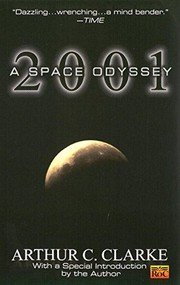
Arthur C. Clarke's classic science fiction work 2001: A Space Odyssey explores themes of human evolution, artificial intelligence, and extraterrestrial life as a mysterious monolith influences human development from prehistoric times to deep space exploration. On the Lex Fridman Podcast, Ariel Ekblaw referenced HAL from the story during an episode in March 2022 titled #271 – Ariel Ekblaw: Space Colonization and Self-Assembling Space Megastructures. Ekblaw discussed the future of intelligent space habitats and mentioned that while people often feel scared of a habitat having a mind of its own like HAL, engineers are currently building sensing technologies that allow structures to communicate their functions. Later, on an episode from January 2020 titled Ayanna Howard: Human-Robot Interaction and Ethics of Safety-Critical Systems, the host asked the guest if she had ever seen the cinematic adaptation of the book, bringing it up in the broader context of discussing modern artificial intelligence, robotics, and safety ethics. Across these podcast appearances, the book serves as a cultural touchstone for evaluating both the promise and the existential dread surrounding autonomous technologies and intelligent built environments as humanity pushes further into the frontiers of space colonization and advanced machine learning.
Who recommended it
- Ariel Ekblaw Discussed
Ariel Ekblaw — 1 mention
“The future of space habitats is one of intelligent structures—maybe not all the way to HAL from the 2001: A Space Odyssey reference that scares people about a habitat having a mind of its own—but certainly, we're building systems now where the habitat has sensing technology that allows it to communicate its basic functions.”
Also mentioned in the same episodes
Other mentions (1: passing, ad reads, own books)
“there have you happen to have ever seen Space Odyssey 2001 Space Odyssey”