
Person
Every book Anna Gat recommended on podcasts
Anna Gat appeared on podcast episodes where she discussed and recommended several books and theatrical works spanning dramatic writing, philosophy, and general science. Gat recommended Russ Roberts's book Wild Problems, expressing her personal enjoyment of it and noting that she frequently gifts and recommends it to individuals facing difficult choices in their lives. She also brought up David Mamet's Three Uses of the Knife, praising it as one of the best books on dramatic writing that any lay person can read to understand narrative and human theatrical understanding. In addition to books, Gat praised Tom Stoppard's Arcadia as one of her favorite modern plays, recounting her vivid memories of reading it for the first time. She also discussed James Gleick's 1988 book Chaos, highlighting how it successfully explained complex chaos theory concepts to a general audience and inspired subsequent works.
Books recommended by Anna Gat
-
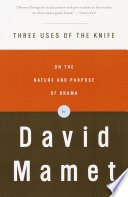
Three Uses of the Knife
Three Uses of the Knife by David Mamet is a widely acclaimed exploration of dramatic writing, storytelling, and the foundational mechanics of the stage.
Recommended“And I think humans have a I mean this is the David Mamemed idea from three uses of the knife which is one of the best books on dramatic writing that any lay person can read.”
Where to get it
-
Wild Problems
Wild Problems by Russ Roberts is a 2022 book that explores how to make hard choices when logic, data, and traditional cost-benefit analyses fall short, particularly regarding life-altering decisions.
Recommended“Um and you came on to talk about your book Wild Problems that came out in 2022 which I greatly enjoyed. Um and yeah, I do still recommend it to people. And if somebody seems especially troubled in my life, I get off for them for Christmas with a little, you know, wink wink.”
Where to get it
-
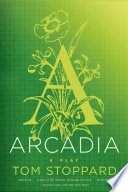
Arcadia
Arcadia is a celebrated modern play written by Tom Stoppard that explores themes of time, mathematics, literature, and historical continuity across different centuries.
Discussed“Arcadia is also one of my favorite modern plays, um maybe among I don't know four or five um other works. um I think there is absolutely nothing like it and I distinctly remember the first time I read it.”
Where to get it
-
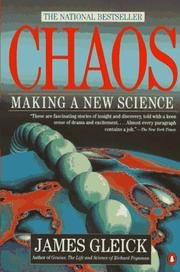
Chaos
Chaos by James Gleick is a foundational non-fiction book published in 1988 that explains the principles of chaos theory to a general audience.
Discussed“So James Gleak in 1988 publishes chaos um his book explaining chaos theory to a a general audience.”
Where to get it
Appearances
| Episode | Podcast | Date | Books |
|---|---|---|---|
| Conversation, Interintellect, and Arcadia (with Anna Gat) | EconTalk | 2026-01-05 | 4 |
Other mentions (4: passing, ad reads, own books)
“And today of course my generation knows James Click primarily from the information which is his much newer book I think 20 2011 or 2010 um which explains information theory to a audience fantastically”
“So this included um Robert Sapolski's a primate memoir where I was laughing so hard on the subway that people asked me what I was reading.”
“And also Arcadia, which I first read on the upper deck of a bus in London. Um, and I was laughing so hard that I remember crying tears on the book”
“And I think every student at some point, you know, whether it's because you're reading the name of the rose, whether it's because you're studying, you know, the history of these ancient manuscripts, at some point you have to face the library of Alexandria's demise”