
Person
Every book Andrew Sage recommended on podcasts
Andrew Sage’s most recommended books
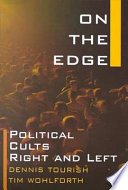
- On the Edge by Dennis Tourish
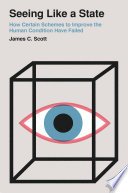
- Seeing Like a State by James C. Scott
- Against the Grain by James C. Scott
- Tools for Conviviality by Ivan Illich
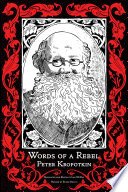
- Words of a Rebel by Peter Kropotkin
- Bounded Choice by Janja Lalich
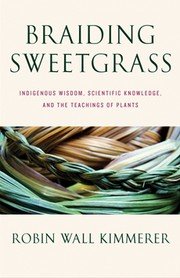
- Braiding Sweetgrass by Robin Wall Kimmerer
- The Authoritarians by Bob Altemeyer
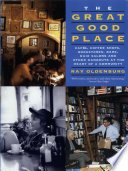
- The Great Good Place by Ray Oldenburg
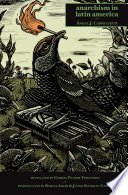
- Anarchism in Latin America by Ángel J. Cappelletti
Andrew Sage is a podcast contributor best known for his work on Behind the Bastards. Throughout various episodes, he frequently recommends and discusses non-fiction books covering topics such as biocultural diversity, historical development, migration, state infrastructure, and political movements. Sage recommended David Harmon’s In Light of Our Differences during a discussion on taxonomic systems and biocultural diversity, and he praised Samuel Miller McDonald’s Progress as an enjoyable read when introducing historical eras of parasitism. He also brought up Sally Hayden’s My Fourth Time, We Drowned to highlight the harsh treatment of migrants in Libya, and recommended James C. Scott’s Seeing Like a State as a classic text illustrating how state infrastructure enables social engineering and control. To support discussions on political history and psychology, Sage recommended Ángel J. Cappelletti’s Anarchism in Latin America as well as Alexandra Stein’s Terror, Love, and Brainwashing to explore totalitarian systems and cult dynamics. Additionally, he referenced Scott E. Page’s The Difference to examine how cognitive toolboxes allow people to solve problems through diverse approaches.
Books recommended by Andrew Sage
-
On the Edge
On the Edge: Political Cults Left and Right by Dennis Tourish and Tim Wohlforth is an analytical exploration of how political cults operate and recruit members across the ideological spectrum.
Discussed“Continuing with the work of Dennis Turish and Tim Wolforth in their book on the edge political cults left and right. I've spoken before about the cult recruitment process”
Where to get it
-
Seeing Like a State
James C.
Recommended“If you're really interested in how infrastructure has the capacity to control and truly just how states sort of see things, I have to of course recommend the classic Jamesc.”
Where to get it
-
Against the Grain
Why people recommend it: Challenging traditional assumptions about the rise of human civilization and the origins of state control, Against the Grain by James C.
Discussed“But one thing is really stuck with me in reading, for instance, Jamesy Scott, which talks about this and against the green, it's just whole fragile and not inevitable.”
Where to get it
-
Tools for Conviviality
Tools for Conviviality by Ivan Illich is a 1973 philosophical work critiquing modern industrial society and advocating for user-friendly tools that empower communities rather than specialized elites.
Discussed“One of the authors that I tend to go back to often is I because he critiques a lot of this stuff particularly infrastructures control in tools for coniviality.”
Where to get it
-
Words of a Rebel
Words of a Rebel by Peter Kropotkin is a collection of anarchist essays addressing political theory, social organization, and revolutionary tactics.
Discussed“But if we're going by cropotkins description in words of a rebel chapters 10 to 11, he makes it clear that commune describes any group formed on the basis of free association. In fact, he juxtaposes the free commune with traditional conceptions of the commune.”
Where to get it
-
Bounded Choice
Discussed“I also got some information on Dixon's activity, not just from On the Edge, but also from the book Bounded Choice: True Believers and Charismatic Cults by Janja Lich, who was actually a member of Dixon's Democratic Workers Party for 10 years.”
Where to get it
-
Braiding Sweetgrass
Braiding Sweetgrass by Robin Wall Kimmerer is a renowned exploration of botany, Indigenous wisdom, and humanity's reciprocal relationship with the natural world.
Discussed“According to Hodonosini mythology as recounted by Robin Wal Kimmera in Braden Sweetgrass, the mother goddess Skywoman came to the land as an immigrant from the heavens but became indigenous by listening to the land”
Where to get it
-
The Authoritarians
Discussed“But the more hostile reactions had me thinking about a book that I read many years ago and did a video on years after that was called the authoritarians by Bob Altmire.”
Where to get it
-
The Great Good Place
The Great Good Place by Ray Oldenburg is a foundational sociology book exploring the importance of third places like coffee shops and bookstores in community life.
Discussed“In his seinal work, The Great Good Place, published 1989, American sociologist Ray Olenberg presents a captivating notion for a balanced and fulfilling life, a harmony among the three spheres, the home, the workplace, and the realm of third places.”
Where to get it
-
Anarchism in Latin America
Anarchism in Latin America by Ángel J.
Recommended“Also got to do the shout out for Capulet's Anarchism in Latin America. Great book. Also, great cover. Got a big bird on it.”
Where to get it
-
In Light of Our Differences
In Light of Our Differences by David Harmon is an engaging examination of biocultural diversity and the ways human societies classify and interact with the natural world.
Recommended“taxonomic system has evolved with time, but for that discussion, I leave it to a book that I read on the subject that I quite enjoyed, which was In Light of Our Differences by David Harmon.”
Where to get it
-
My Fourth Time, We Drowned
My Fourth Time, We Drowned by Sally Hayden is a deeply harrowing and investigative book that exposes the horrific realities faced by refugees detained in Libya.
Recommended“Have you read Sally Hayden's book about this? No, I haven't. It's called My Fourth Time We Drowned. Very good book.”
Where to get it
-
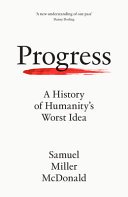
Progress
Progress by Samuel Miller McDonald is a critical examination of historical eras that explores the pervasive concept of progress and the development of parasitism over time.
Recommended“So, I want to talk about parasism, the development of parism over time, as discussed in Samuel Miller McDonald's book progress, which I highly recommend. Quite an enjoyable read.”
Where to get it
-
Terror, Love and Brainwashing
Terror, Love and Brainwashing by Alexandra Stein is a comprehensive examination of the psychological mechanisms behind attachment, cults, and totalitarian systems.
Recommended“Very interesting connections. If people want to learn more about him, they can of course pick up the book or they can check out Terror, Love, and Brainwashing: Attachment and Cults and Totalitarian Systems by Alexandra Stein.”
Where to get it
-
Better Never to Have Been
Better Never to Have Been by David Benatar is a philosophical work that sets forth a rigorous anti-natalist argument regarding the harms of coming into existence.
Discussed“And most famously, South African philosopher David Benetar laid out one of the main anti-natalist arguments in his book, Better Never to Have Been, the Harm of Coming into Existence.”
Where to get it
-
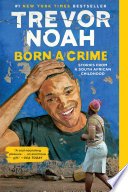
Born a Crime
Born a Crime by Trevor Noah is a critically acclaimed autobiographical memoir detailing the comedian's extraordinary upbringing as the child of a white Swiss father and a Black Xhosa mother in apartheid South Africa, where his very existence was illegal.
Discussed“So recently I read Born a Crime by Trevor Noah. It was his memoir of his childhood in South Africa. And politics aside, he's a decent comedian and had me laughing out loud and thinking a lot as well.”
Where to get it
-
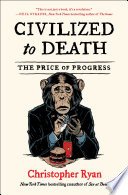
Civilized to Death
Civilized to Death by Christopher Ryan is a critical examination of modern human progress that argues civilization has left people sicker, lonelier, and more anxious than their hunter-gatherer ancestors.
Discussed“I think it's curious because when I look at, for instance, this book, Civilized Death by Christopher Ryan, and he uses this concept of human domestication.”
Where to get it
-
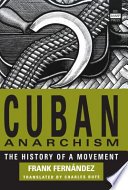
Cuban Anarchism
Discussed“As Francisco Fernandez wrote in Cuban anarchism, the history of a movement, hopefully there are those in this generation who will take up the legacy of their forebears so that the roots of anarchism that are now buried in the fertile Cuban soil will once again spring to life.”
Where to get it
-
Debt
Debt: The First 5,000 Years by David Graeber is a sweeping anthropological examination of the history and social functions of debt, credit, and power across human civilizations.
Discussed“This is something that Griber talks about in debt the first 5,000 years. He says this is the glue that holds society together. Not contracts or power, but solidarity, empathy, and the natural human inclination to care for others.”
Where to get it
-
Doublets: A Word-Puzzle. By Lewis Carroll. Third Edition
Discussed“In Charles Dawson's or Lewis Carol's 1880 book, Dublets, a word puzzle, there are examples of this where he says to quote drive pig into sty raise four to five, make wheat into bread.”
Where to get it





The other 27 books Andrew Sage recommended or discussed, ranked
- Facing Reality by C. L. R. James
- Four Arguments for the Elimination of Television by Jerry Mander
- From What Is to What If by Rob Hopkins
- How Everything Can Collapse by Pablo Servigne
- Ishmael by Daniel Quinn
- Kropotkin, Read, and the Intellectual History of British Anarchism by M. Adams
- Libya by John Oakes
- Little Red Book by Mao Zedong
- Myth of the Machine by Lewis Mumford
- Peter Kropotkin by George Woodcock
- Power and Authority by Fred Newman
- The authoritarian personality by Theodor W. Adorno
- The Authoritarian Specter by Bob Altemeyer
- The Black Jacobins by C.L.R. James
- The Botany of Desire by Michael Pollan
- The Conquest of Bread by Peter Kropotkin
- The Cuban Revolution by Sam Dolgoff
- The Dawn of Everything by David Graeber
- The Difference by Scott E. Page
- The Exeter Book by Israel Gollancz
- The First World War by Adam Matthew Publications
- The Population Bomb by Paul R. Ehrlich
- The Private Life of the Queen by One of Her Majesty's Servants
- The Transition Handbook by Rob Hopkins
- Thinking Inside the Box by Adrienne Raphel
- When Technology Wounds by Chellis Glendinning
- Wild Thought by Claude Lévi-Strauss
Appearances
Other mentions (3: passing, ad reads, own books)
“In The Hobbit, our hero Bilbo Baggins best Gollum in a riddle contest by asking him the unknowable, "What's in my pocket?"”
“Much of the information I gathered is thanks to the scholarship of Lucian Vanderwalt, a South African anarchist and professor of sociology. Particularly I'll be looking at the work on anarchism and cynicalism southern Africa from the international encyclopedia of revolution and protest”
“Particularly I'll be looking at the work on anarchism and cynicalism southern Africa from the international encyclopedia of revolution and protest and anarchism and cynicalism in the colonial and postcolonial world.”