
Episode · How I Write · 2024-03-06
David Perell & Michael Mauboussin: books mentioned on How I Write
Write Like Wall Street’s Best | Michael Mauboussin | How I Write Podcast
David Perell recommended The success equation by Michael J. Mauboussin, and discussed The Sense of Style by Steven Pinker, Understanding Media by Marshall McLuhan, and The Wisdom of Crowds by James Surowiecki. Michael Mauboussin discussed Letters of E. B. White by E. B. White, The Wealth of Nations by Adam Smith, Fooled by Randomness by Nassim Nicholas Taleb, Full House by Stephen Jay Gould, and On Writing by Stephen King.
Books mentioned, in the order they came up
-
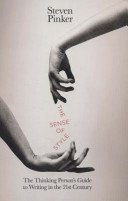
The Sense of Style
The Sense of Style by Steven Pinker is a modern guide to writing that combines traditional grammar with contemporary linguistics and cognitive science.
Discussed“And we were talking before we started about Steven Pinker and the sense of style and how in chapter three he talks about the curse of knowledge.”
Where to get it
-
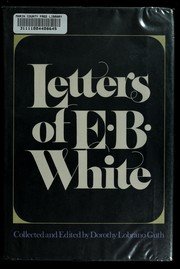
Letters of E. B. White
Discussed“So for example, Strunk and White, which is another classic book I'm writing, is more of a practical style.”
Where to get it
-
Understanding Media
Understanding Media by Marshall McLuhan is a classic media theory text that examines how various communication channels shape human thought, culture, and society.
Discussed“And I had this with Marsh McLennan. I read Understanding Media when I was fresh out of college, and there was something about the way that McLennan explained the similarities”
Where to get it
-
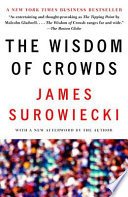
The Wisdom of Crowds
The Wisdom of Crowds by James Surowiecki is an influential examination of how large groups of people can collectively demonstrate greater intelligence, problem-solving ability, and decision-making accuracy than even the smartest individual experts within the group.
Discussed“And then also the wisdom of crowds just shows up over and over and over again. And I think it's a good testament to how deeply you can mine a worthy idea for years, for decades.”
Where to get it
-
The Wealth of Nations
The Wealth of Nations by Adam Smith is a foundational 1776 text by the Scottish thinker often regarded as the father of modern economics, exploring free markets, capitalism, and the mechanics of national wealth.
Discussed“Increasing returns, first described by Adam Smith and Wealth of Nations in 1776. You remember the pin factory idea?”
Where to get it
-
Fooled by Randomness
Fooled by Randomness by Nassim Nicholas Taleb is a popular exploration of the massive role that chance, luck, and probability play in human success, finance, and everyday life.
Discussed“One was Fooled by Randomness, where that came out in 2001. And I read it and I was like, absolutely makes sense.”
Where to get it
-
Full House
Full House is a nonfiction book by evolutionary biologist Stephen Jay Gould that explores the concepts of variation, progress, and the paradox of skill.
Discussed“I got that from reading his book, Full House, in the book. I give him full attribution.”
Where to get it
-
On Writing
On Writing by Stephen King is a celebrated memoir and masterclass that blends the author's personal experiences with practical, no-nonsense advice for aspiring writers.
Discussed“No, over the last year, I'm embarrassed to say this, I hadn't read it before, but I read Stephen King's book on writing. Have you read that book?”
Where to get it
-
The success equation
The success equation by Michael J.
Recommended“Thanks for all your writing and The Success Equation in particular. I love that book. I love the idea of the paradox of skill.”
Where to get it

Other mentions in this episode (1) — ad reads, self-promotion and passing references, never counted
“So I wrote a book in 2009 called 2010, 2009 called Think Twice. And it's about exactly what the title says, when you are faced with certain types of situations,”