Episode · Lex Fridman Podcast · 2022-07-17
Books mentioned on #303 – Steve Keen: Marxism, Capitalism, and Economics
Steve Keen is a heterodox economist and author. Please support this podcast by checking out our sponsors: – Weights & Biases: https://lexfridman.
Books mentioned, in the order they came up
-
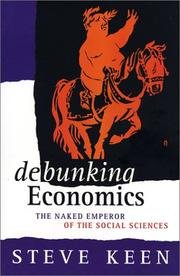
Debunking Neo-classical Economics
Debunking Neo-classical Economics is an academic critique by economist Steve Keen that challenges traditional economic models and mainstream neoclassical theories regarding market equilibrium, debt, and monetary dynamics.
Recommended“he has written several books I recommend including the new economics and Manifesto and debunking economics”
-
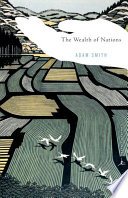
The Wealth of Nations
The Wealth of Nations by Adam Smith is a foundational 1776 text in classical economics by the Scottish thinker widely seen as the father of modern economics, exploring the mechanics of free markets, national productivity, and division of labor.
Discussed“certainly rard I find totally like reading a cardboard cutout version of uh of the wealth of of The Wealth of Nations it's uh I find his worth trivial”
-
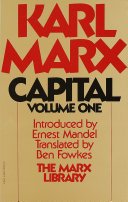
Capital
Capital by Karl Marx is a foundational economic and philosophical work that critiques capitalist production and class society.
Discussed“that's what you want to find a great explanation for Marxist philosophy I forgotten the author I think it's wild wde Marx in contradiction”
-
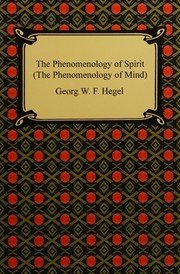
The phenomenology of spirit
Discussed“and Otto returned to Marx a copy of of hegel's phenomenal I think it's called phenomenology of right I haven't read it but that's the book”
-
Grundrisse
Grundrisse by Karl Marx is a massive and influential collection of preliminary notebooks written in 1857 and 1858 that laid the theoretical groundwork for Das Kapital, focusing on the critique of political economy, capitalism, and production.
Discussed“and then on page 267 of the penguin edition of the grandr literally your memory one and a half pages long footnote”
-
earth abides
Earth Abides by George R.
Recommended“and there's a wonderful science fiction book called the Earth abides about a world in which humans get wiped out there's only a tiny band left and then the Earth reasserts itself”
-
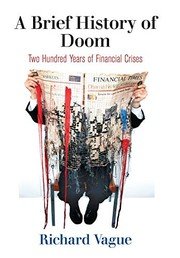
A Brief History of Doom
A Brief History of Doom is a nonfiction economics book by Richard Vague that examines the history of major financial crises and debt accumulation, arguing that excessive private debt is the primary driver of economic collapses.
Recommended“so you had a housing bubble at the beginning of the 1920s which Richard vague covers beautifully in the uh brief history of Doom”