
Episode · Lex Fridman Podcast · 2020-03-31
Books mentioned on #85 – Roger Penrose: Physics of Consciousness and the Infinite Universe
Roger Penrose is physicist, mathematician, and philosopher at University of Oxford. He has made fundamental contributions in many disciplines from the mathematical physics of general relativity and cosmology to the limitations of a computational view of consciousness.
Lex Fridman discussed The Emperor's New Mind by Roger Penrose and Cycles of Time by Roger Penrose. Roger Penrose discussed Gödel, Escher, Bach by Douglas R. Hofstadter and A Brief History of Time by Stephen Hawking.
Books mentioned, in the order they came up
-
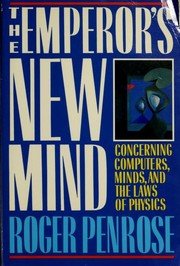
The Emperor's New Mind
Roger Penrose's influential work explores the intersections of physics, consciousness, and the philosophy of mind, famously challenging the notion that human brains operate merely like computers.
Discussed“in his book the emperor's new mind roger writes that quote children are not afraid to pose basic questions that may embarrass us as adults to ask”
Where to get it
-
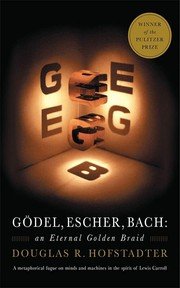
Gödel, Escher, Bach
Gödel, Escher, Bach: An Eternal Golden Braid by Douglas R.
Discussed“I'm gonna have this curious conversation with with I'm going to forget names and I'm afraid because this is what happens to me in the wrong moment I've said I'd Douglas have said this after and he's written this book God I wish I liked I thought it was a fantastic book But I didn't agree with his conclusion from”
Where to get it
-
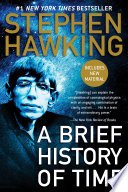
A Brief History of Time
Stephen Hawking's landmark popular science book has served as an iconic introduction to cosmology and black holes for millions of readers worldwide.
Discussed“it was roughly the same time Stephen Hawking this writing his brief history of time and Hades at some point the book you're talking about the emperor's new mind”
Where to get it
-
Cycles of Time
Discussed“in your 2010 book cycles of time you suggest that another universe may have existed before the big bang”
Where to get it
Other mentions in this episode (1) — ad reads, self-promotion and passing references, never counted
“so i wrote this book through my scientific career i thought you know when i'm retired i have enough time to write a sort of a popular book which i will explain my ideas and puzzles”