Episode · Conversations with Tyler · 2024-01-24
Books mentioned on Rebecca F. Kuang on National Literatures, Book Publishing, and History in Fiction
Rebecca F. Kuang just might change the way you think about fantasy and science fiction.
Books mentioned, in the order they came up
-
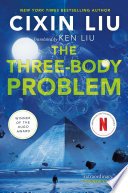
The Three-Body Problem
The Three-Body Problem by Cixin Liu is an acclaimed Chinese science fiction novel that explores humanity's first contact with an alien civilization facing imminent destruction from a triple-star system.
Discussed“Why do you think The Three-Body Problem took off the way it did? Well, it is very good, right?”
Where to get it
-
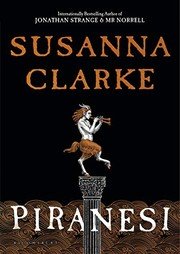
Piranesi
Piranesi by Susanna Clarke is a fantasy novel about a man living in a boundless, statue-filled house with an ocean inside, chronicling his solitary explorations and the mysterious second person who visits him.
Recommended“I really hope that Susanna Clarke lasts. I'm a big fan of her work. I hope Piranesi becomes one of those immortal works of fiction.”
Where to get it
-
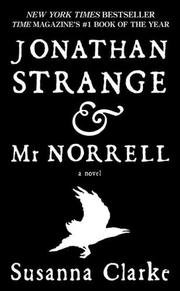
Jonathan Strange and Mr. Norrell
Jonathan Strange and Mr.
Discussed“Do you think that Piranesi was a lot less accessible than Jonathan Strange was?”
Where to get it
-
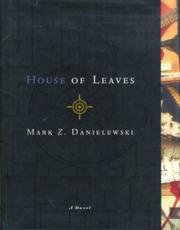
House of Leaves
House of Leaves is a complex postmodern novel by Mark Z.
Discussed“Mark Danielewski. You mean House of Leaves? That's right.”
Where to get it
-
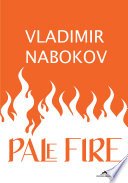
Pale Fire
Pale Fire by Vladimir Nabokov is a complex postmodern novel structured as a long narrative poem with an extensive, eccentric commentary and index written by a deranged scholar.
Discussed“How about Pale Fire? I love Pale Fire. For my birthday this year, one of your friends, Rodrigo, got me this special edition that has the cantos printed on index cards...”
Where to get it
-
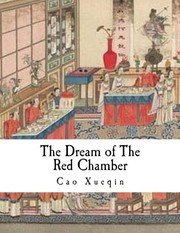
The Dream of The Red Chamber
Tsʻao Hsüeh-chʻin's 18th-century Chinese masterpiece The Dream of the Red Chamber, also known as The Story of the Stone, chronicles the tragic decline of a prominent aristocratic family.
Discussed“But again, you get into Chinese fiction or if you look at a classic work, Dream of Red Chamber, other than people with some kind of background in China or Chinese studies, I know very few people who've read Dream of Red Chamber.”
Where to get it
-
The world republic of letters
Discussed“So, the kind of theories of literary economy and world literature I'm thinking of really start with Pascale Casanova's The World Republic of Letters and she makes some good points about the Latin American authors here...”
Where to get it
-
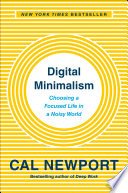
Digital Minimalism
Digital Minimalism by Cal Newport is a self-help guide that advocates for a focused, intentional approach to technology use in order to reclaim personal time and mental well-being.
Discussed“I recently read Digital Minimalism because I was fed up with social media. I found it very compelling. And then I read Deep Work, too.”
Where to get it
-
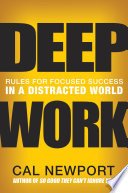
Deep Work
Deep Work by Cal Newport is a productivity guide that explores the ability to focus without distraction on cognitively demanding tasks, arguing that this skill is increasingly rare and valuable in a modern economy.
Discussed“And then I read Deep Work, too. And I know lots of people have strong feelings, good or bad, about all those books.”
Where to get it
-
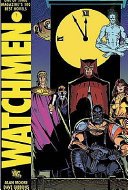
Watchmen
Watchmen is a seminal graphic novel by Alan Moore and Dave Gibbons that deconstructs the superhero genre against the backdrop of an alternate Cold War history.
Discussed“And this might be because we're reading Watchmen right now, which is a comic book that I'd slept on for many years, and I hadn't realized what a Cold War work of fiction it was...”
Where to get it
Other mentions in this episode (8) — ad reads, self-promotion and passing references, never counted
“Today I'm here with Rebecca Kuang, who is a New York Times number one best-selling author with her earlier book, Babel.”
“Her latest work is Yellowface, which I loved. Stephen King described it as the following, quote, "This is a great read. Crime, satire, horror, paranoia, questions of cultural appropriation, Plenty of nasty social media pile-ons, too, but basically just a great story. Hard to put down, harder to forget."”
“She also has a fantasy trilogy of The Poppy War, which is not quite a young adult's novel, but maybe not not a young adult's novel, also.”
“My fiance is reading 2001: A Space Odyssey right now and its sequels, and he was a big fan of Liu Cixin's The Three-Body Problem trilogy, and he's telling me he can see where the Clarke influence comes from.”
“If I had to send a person to one place to learn Chinese science fiction, assuming they're not going to read three volumes of Three-Body Problem, I'd send them to Folding Beijing.”
“Now, a lot of your latest book, Yellowface, deals with the book trade, being a best-selling author.”
“When I wrote Yellowface, this was during mid-2021, so we were all at home and largely existing on the internet, which was the worst place to be.”
“Anyway, Rebecca, thank you very much. Her new book, Loved It Yellowface, out this year, and she tells us over time there will be at least three more books coming.”