
Episode · Conversations with Tyler · 2021-07-28
Books mentioned on Niall Ferguson on Why We Study History
While the modern historical ethos can be obsessed with condescending to the past based on our current value system, Scottish-born historian Niall Ferguson has aimed to set himself apart with his willingness to examine the past in its own context.
Books mentioned, in the order they came up
-
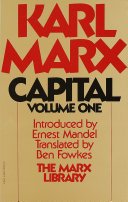
Capital
Capital by Karl Marx is a foundational economic and philosophical work that critiques capitalist production and class society.
Discussed“I think if one reads Capital it is a a prophetic work about England and about any country that follows England down the the route of of Industrial Revolution and and class society.”
-
The 39 steps
Discussed“These books are of the direct lineal descendants, as you probably know Tyler, of the great Richard Hannay books that John Buchan wrote beginning with The 39 Steps.”
-
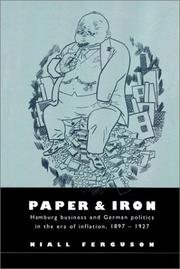
Paper and Iron
Discussed“Paper and Iron. That's your first book?”
-
L'ancien régime
Discussed“I as an undergraduate we were required to read Tocqueville's L'Ancien Régime in French in our first term.”
-
Democracy in America
Democracy in America by Alexis de Tocqueville is the classic nineteenth-century sociological and political study analyzing the structure, culture, and foundational character of American democracy through the eyes of an observant French visitor.
Discussed“And then when we read Democracy in America, it became even clearer what Tocqueville's project was...”
-
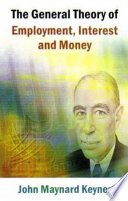
General Theory Of Employment , Interest And Money
The General Theory of Employment, Interest and Money by John Maynard Keynes is a foundational 1936 economic treatise that revolutionized macroeconomics by introducing concepts like aggregate demand, government intervention, and the role of uncertainty in shaping market cycles.
Discussed“So while everybody else was reading Aristotle and uh and Locke, I was reading uh Adam Smith and and then the General Theory. And the General Theory was the hardest thing I'd ever read.”
-
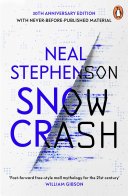
Snow Crash
Snow Crash by Neal Stephenson is a seminal cyberpunk science fiction novel that famously anticipated the concept of the metaverse, multiplayer virtual worlds, and various digital phenomena.
Recommended“The most plausible is Neal Stephenson's Snow Crash. And Stephenson saw really brilliantly that we would end up spending half our lives on the internet...”
Other mentions in this episode (2) — ad reads, self-promotion and passing references, never counted
“I got into an argument with the early Keynes in my very earliest book, the the book Paper and Iron, because I encountered Keynes in a new role...”
“Empire is is the book that uh you couldn't write today. I don't think you could publish that book today.”