Episode · Lex Fridman Podcast · 2021-11-08
Books mentioned on #239 – Niall Ferguson: History of Money, Power, War, and Truth
Niall Ferguson is a historian at Hoover Institution, Stanford University. He is the author of 16 books on the history of money, war, power, and catastrophe.
Books mentioned, in the order they came up
-
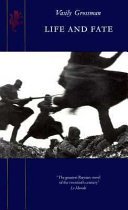
Life and Fate
Life and Fate by Vasily Grossman is a sprawling epic novel portraying the brutal realities, moral complexities, and human ramifications of the Holocaust and the broader Eastern Front during World War II.
Recommended“if only if one reads grossman's life and fate”
Where to get it
-
Mein Kampf
Mein Kampf by Adolf Hitler is a notorious autobiographical manifesto detailing the political ideology and future plans of the Nazi dictator.
Discussed“because it's out of the experience of defeat in 1918 as hitler makes clear in mind camp that he becomes radicalized and enters the political realm”
Where to get it
-
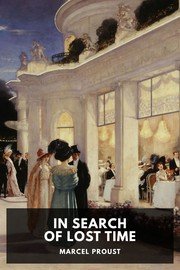
In Search of Lost Time
In Search of Lost Time by Marcel Proust is a monumental multi-volume modernist novel that explores memory, time, and human consciousness.
Discussed“i'm currently in the midst of the later stages of of proust's great allah”
Where to get it
-
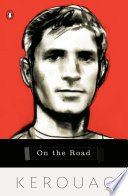
On the Road
On the Road by Jack Kerouac is a seminal novel chronicling the cross-country road trips and jazz-fueled adventures of its narrator and his peers.
Discussed“one of my earliest literary simulations was to reenact jack kerouac tripping on the road when i was 17 culminating and getting very wasted in the hanging gardens of zochimilco”
Where to get it
-
The Captive Mind
The Captive Mind by Czesław Miłosz is a profound analysis of intellectual corruption and moral compromise under totalitarian regimes, written by a Nobel Prize-winning Polish poet who witnessed the devastation of Warsaw firsthand.
Discussed“there's a fantastic book that i'm going to misremember milos is the captive soul the captive mind rather which has a fantastic passage here”
Where to get it
-
War and Peace
War and Peace by Leo Tolstoy is a monumental literary masterpiece that chronicles Russian society, family life, and the dramatic historical events surrounding the Napoleonic Wars.
Discussed“i think um of all of those writers tolstoy had the biggest impact because at the end of war and peace there's this great essay on historical determinism which i think was the reason i became a historian”
Where to get it
-
The Brothers Karamazov
The Brothers Karamazov by Fyodor Dostoevsky is a profound philosophical novel that delves deeply into faith, doubt, morality, and free will through the tumultuous relationships of the Karamazov family.
Recommended“if you haven't read the brothers karamazov you will not really you're not grown up”
Where to get it
-
Crime and Punishment by Fyodor Dostoevsky
Crime and Punishment by Fyodor Dostoevsky is a classic psychological novel that examines the heavy moral burdens, intense guilt, and philosophical dilemmas faced by a desperate student in Saint Petersburg who commits a heinous crime.
Discussed“remember raskolnikov's nightmare at the end of crime and punishment in which he imagines in his dream a world in which a terrible virus spreads”
Where to get it
-
Crime and Punishment by Fyodor Dostoevsky (Illustrated)
Crime and Punishment by Fyodor Dostoevsky (Illustrated) is a monumental psychological masterpiece that delves into the tormented mind of a young man who commits a desperate crime and grapples with crushing guilt and moral redemption.
Discussed“remember raskolnikov's nightmare at the end of crime and punishment in which he imagines in his dream a world in which a terrible virus spreads”
Where to get it

Other mentions in this episode (9) — ad reads, self-promotion and passing references, never counted
“i remember looking at great numbers of these in the british museum when i was writing the ascent of money”
“and this was the point of the ascent of money as an evolutionary story”
“and they illustrate something i should have made more clear of the ascent of money that not everything used in payment needs to be money”
“when it hit me the other day that we actually had this precedent for crypto i got quite excited and thought i wish i had written that in the ascent of money”
“when i updated the ascent of money which was in 2018 10 years after it came out i wrote a new chapter in which i said bitcoin which had just sold off after its 2017 bubble will rise again through adoption”
“when i wrote this under money which was in 2008 you couldn't really solve the problem”
“this argument was central to my book the pity of war”
“in a book called the square in the tower i argued that it would be very costly for the united states to allow the public sphere to continue to be dominated by a handful of big tech companies”
“in a book called the square in the tower i argued that it would be very costly for the united states to allow the public sphere to continue to be dominated by a handful of big tech companies”