
Episode · Conversations with Tyler · 2015-10-01
Tyler Cowen & Dani Rodrik: books mentioned on Conversations with Tyler
Dani Rodrik on Premature Deindustrialization and Why the World is Second Best at Best
Tyler and Dani Rodrik discuss premature deindustrialization, the world's trilemmas, the political economy of John le Carré, what's so special about manufacturing, Orhan Pamuk, RCTs, and why the world is second best at best. Read a full transcript enhanced with helpful links, or watch the full video.
Dani Rodrik recommended Purity by Jonathan Franzen. Tyler Cowen discussed Economics Rules by Dani Rodrik.
Books mentioned, in the order they came up
-
Purity
Purity by Jonathan Franzen is a sprawling contemporary novel that examines modern journalism, family secrets, global activism, and personal identity through an interconnected cast of characters.
Recommended“I like Ian McEwan a lot. I’m reading Jonathan Franzen’s book, Purity, right now, which I enjoy. He draws you in.”
Where to get it
-
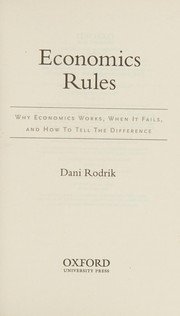
Economics Rules
Economics Rules by Dani Rodrik is a book that examines the strengths, limitations, and proper applications of economic models in understanding real-world policy and human behavior.
Discussed“As an economic method, going back to your book, this book Economic Rules, randomized control trials as an economic method. Overrated or underrated?”
Where to get it

Other mentions in this episode (1) — ad reads, self-promotion and passing references, never counted
“His new book, which I’ll mention again, Economics Rules — that’s spelled R-U-L-E-S. Why should I not read my own blurb? Quote, “The best economists make the best methodologists, and Dani Rodrik is both. His Economics Rules is the single best source for explaining the strengths and weaknesses of economics to an outside audience.””