
Episode · The Tim Ferriss Show · 2020-04-13
Books mentioned on #420: Books I've Loved — Matt Mullenweg
#420: Books I've Loved — Matt Mullenweg | Brought to you by Audible. Welcome to another episode of The Tim Ferriss Show, where it is my job to sit down with world-class performers of all different types—from startup founders and investors to chess champions to Olympic athletes.
Books mentioned, in the order they came up
-
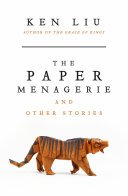
The Paper Menagerie
The Paper Menagerie by Ken Liu is a captivating collection of speculative fiction blending science fiction and fantasy elements into emotionally resonant narratives.
Recommended“The first is called Paper Menagerie and Other Stories, which is by Ken Liu. This is kind of sci-fi, but honestly, I've recommended this to a ton of people, including getting a copy for 10 before, and um they've loved it.”
Where to get it
-
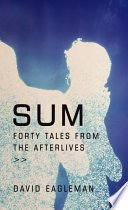
Sum
Sum by David Eagleman is a short, thought-provoking work of speculative fiction comprising forty imaginative tales from various afterlives.
Recommended“Second one is called Sum, which is 40 tales from the afterlives. This is by a guy who's normally more of a science writer named David Eagleman. Uh each one of these stories is only two to three pages long”
Where to get it
-
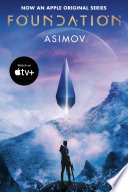
Foundation
Foundation by Isaac Asimov is a seminal science fiction masterpiece chronicling the collapse and rebirth of a galactic empire.
Recommended“The third and the fun section, or fiction section, that I'll recommend uh is actually kind of a secret weapon in that I've met a ton of other CEOs and founders and folks who ultimately they were highly, highly influenced by this book. And that is the Foundation by Isaac Asimov.”
Where to get it
-
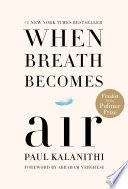
When Breath Becomes Air
When Breath Becomes Air by Paul Kalanithi is a profound posthumous memoir written by a neurosurgeon facing a terminal cancer diagnosis, exploring mortality, meaning, and the human condition.
Recommended“On that topic a little bit, and this one is is probably going to make you cry if you read it, is called When Breath Becomes Air by Paul Kalanithi. And this is also a little bit of a posthumous book”
Where to get it
-
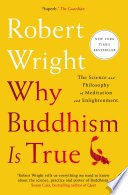
Why Buddhism is True
Why Buddhism is True by Robert Wright is an exploration of evolutionary psychology and ancient Buddhist philosophy that examines how the human mind creates suffering and how mindfulness can alter our perception of reality.
Recommended“It's called uh Why Buddhism is True by Robert Wright. I grew up Catholic, you know, this wasn't a book I'm I'm not Buddhist, not becoming Buddhist, no plans there. Uh but I found that this book, which takes kind of a neuroscience view...”
Where to get it
-
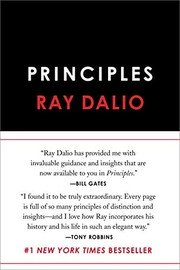
Principles
Principles by Ray Dalio is a prominent business and life guide outlining systematic approaches to decision-making, management, and understanding economic cycles.
Recommended“It's called Principles by Ray Dalio, who's one of the most successful hedge fund investors. And he runs his company in an extremely interesting way.”
Where to get it
-
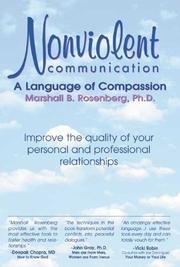
Nonviolent Communication
Nonviolent Communication by Marshall B.
Recommended“It's called Nonviolent Communication, which is by Marshall Rosenberg. And this means nonviolent in the sense that Gandhi was nonviolent or Martin Luther King.”
Where to get it
-
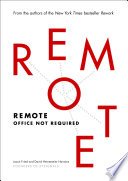
Remote
Remote by Jason Fried and David Heinemeier Hansson serves as a comprehensive guide to navigating distributed work cultures and operating organizations without a traditional central office.
Recommended“I'm going to recommend a book called Remote, which is by the folks over at Basecamp, Jason Fried and David Heinemeier Hansson. Uh, this is probably the best guide available right now uh, to doing working remotely or in a distributed fashion.”
Where to get it
-
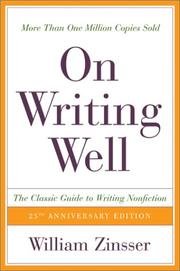
On Writing Well
William Zinsser's On Writing Well is a widely acclaimed classic guide to non-fiction writing that emphasizes clarity, simplicity, and the removal of clutter from prose.
Recommended“And the book that's been most influential in my entire life there was called On Writing or is called On Writing Well by William Zinsser. Uh, writing to me is not just something for communication.”
Where to get it
-
Metaphors We Live By
Metaphors We Live By by George Lakoff and Mark Johnson is an influential academic text that investigates how everyday human thought and language are fundamentally shaped by conceptual metaphors.
Recommended“I'm going to go a little esoteric for this next one and talk about a book which is a little more academic, which is by an author named George Lakoff, and it's called Metaphors We Live By.”
Where to get it
-
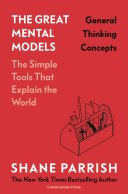
The Great Mental Models: General Thinking Concepts
The Great Mental Models: General Thinking Concepts by Shane Parrish is a foundational guide designed to help readers improve their decision-making and cognitive frameworks by utilizing mental models from various disciplines.
Recommended“Also a fairly new book by Shane Parrish, best known for uh Farnam Street, which is has a great podcast and has great site, fs.blog, I And they're doing a five volume series called the great mental models.”
Where to get it
-
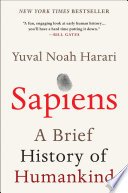
Sapiens
Sapiens: A Brief History of Humankind by Yuval Noah Harari is a sweeping exploration of how Homo sapiens evolved, dominated the planet, and constructed complex imaginary orders like religion, money, and nations.
Recommended“He's probably best known for Sapiens, which is I'd say Yuval is a author who can synthesize a ton of information across history, both modern and older.”
Where to get it
-
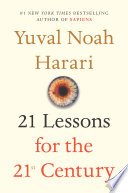
21 Lessons for the 21st Century
21 Lessons for the 21st Century is a thought-provoking book by Yuval Noah Harari that examines contemporary technological, political, and existential challenges facing humanity.
Recommended“But I would say my favorite, if you're going to pick one book of his, was his his last one, which was 21 Lessons for the 21st Century. Super fascinating.”
Where to get it
-
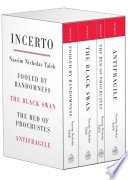
Fooled by Randomness
Fooled by Randomness by Nassim Nicholas Taleb is a popular exploration of the massive role that chance, luck, and probability play in human success, finance, and everyday life.
Recommended“The second is a much more controversial author, but um I would say ever since I was exposed to one of his early works, Fooled by Randomness and Black Swan, I will probably always be a fan of Nassim Taleb.”
Where to get it
-
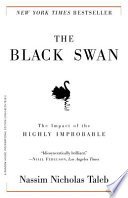
The Black Swan
The Black Swan by Nassim Nicholas Taleb is a provocative non-fiction book exploring the massive impact of rare, highly improbable events and human society's systemic blindness to uncertainty.
Recommended“The second is a much more controversial author, but um I would say ever since I was exposed to one of his early works, Fooled by Randomness and Black Swan, I will probably always be a fan of Nassim Taleb.”
Where to get it
Other mentions in this episode (3) — ad reads, self-promotion and passing references, never counted
“The next is The Graveyard Book by Neil Gaiman, g a i m a n. One of my favorites. Even if you're a non-fiction purist, this is the fiction book that you need to listen to.”
“And third, Greg McKeown's Essentialism. Subtitle, The Disciplined Pursuit of Less. This is one of my favorite books of the past few years.”
“I love Sapiens like everyone did. I read Homo Deus. But I would say my favorite, if you're going to pick one book of his, was his his last one...”