
Book · 2006 · Charities, united states
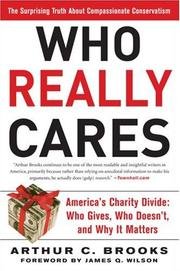
Who Really Cares
The Surprising Truth About Compasionate Conservatism Who Gives, Who Doesn't, and Why It Matters
Who Really Cares by Arthur C. Brooks has been mentioned in 5 episodes across 5 podcasts (1 episode recommends it and 4 episodes discuss it), through . Most frequently brought up by Steven Crowder (1 episode), Arthur Brooks (1 episode) and Chris Freiman (1 episode) on Conversations with Tyler (1 episode), Freakonomics Radio (1 episode) and The Joe Rogan Experience (1 episode).
- episodes
- 5
- podcasts
- 5
- people
- 6
- episode recommends it
- 1
Your 2007 book, Who Really Cares?, it had a data-backed thesis that was correct at the time, that political conservatives are more generous than political democrats.
 Tyler Cowen · Conversations with Tyler · Apr 2026
Questions about Who Really Cares by Arthur C. Brooks
Who recommends Who Really Cares by Arthur C. Brooks on podcasts?
Steven Crowder (1 episode) has recommended Who Really Cares by Arthur C. Brooks on podcasts. In all, 6 people brought it up across 5 podcasts (1 person recommended it).
Which podcasts mention Who Really Cares the most?
Conversations with Tyler (1 episode), Freakonomics Radio (1 episode), The Joe Rogan Experience (1 episode), The Rubin Report (1 episode) and Timcast IRL (1 episode).
Is Who Really Cares recommended, or only discussed?
Who Really Cares by Arthur C. Brooks was recommended in 1 episode and discussed without a recommendation in 4 episodes, as of 2026-04-01.
What do people say about Who Really Cares?
Tyler Cowen on Conversations with Tyler (2026-04-01): "Your 2007 book, Who Really Cares?, it had a data-backed thesis that was correct at the time, that political conservatives are more generous than political democrats."
When was Who Really Cares last mentioned on a podcast?
Who Really Cares by Arthur C. Brooks was last discussed on Conversations with Tyler by Tyler Cowen on 2026-04-01.
What they say about it
- Discusses author and title“called who really cares”4

The best things said about it
Out of this research came his first book in 2006 it was called Who Really Cares: The Surprising Truth About Compassionate Conservatism.
President Bush read my book.
There's a great book called who really cares by it's about famine mentality Arthur Brooks or David Brooks.
 Steven Crowder The Joe Rogan Experience · Feb 2017
Where and when it comes up
Most episodes, by podcast
6 people who brought it up
Why people recommend it
Arthur C. Brooks's Who Really Cares explores the data behind charitable giving, generosity, and political persuasion. The book was highlighted on several podcasts by different commentators discussing its surprising sociological conclusions. On The Joe Rogan Experience, Steven Crowder brought up the book while talking about who donates and who is generous based on political persuasion. Tyler Cowen later mentioned it on Conversations with Tyler, noting its data-backed thesis that political conservatives are historically more generous than political democrats. On Freakonomics Radio, Stephen Dubner and Arthur Brooks discussed the release of the 2006 book, then titled Who Really Cares: The Surprising Truth About Compassionate Conservatism, and explored the public reception of its non-partisan findings, including the detail that President Bush read it. Larry Elder also brought up the work on Timcast IRL to discuss findings on the generosity of conservatives versus liberals. Finally, Dave Rubin and Chris Freiman discussed the volume on The Rubin Report while debating the differences in charitable giving across various political ideologies. Listeners and hosts frequently revisit the book for its quantitative look at philanthropy, personal responsibility, and the underlying motivations of compassion in American society, making it a recurring reference point in discussions bridging politics, sociology, and ethics.
Every mention
Steven Crowder there's a great book called who really cares by it's about famine mentality Arthur Brooks or David Brooks 1
“there's a great book called who really cares by it's about famine mentality Arthur Brooks or David Brooks”
Arthur Brooks President Bush read my book 1
“President Bush read my book”
Chris Freiman well so so I'm not sure although I do remember this book is probably a little old by now called who really… 1
“well so so I'm not sure although I do remember this book is probably a little old by now called who really cares by Arthur Brooks have you ever come across”
Larry Elder there's a book called who really cares by a guy named arthur c brooks 1
“there's a book called who really cares by a guy named arthur c brooks”
Stephen Dubner out of this research came his first book in 2006 it was called who really cares the surprising truth about… 1
“out of this research came his first book in 2006 it was called who really cares the surprising truth about compassionate conservatism”
Tyler Cowen Now, your 2007 book, Who Really Cares?, it had a data-backed thesis that was correct at the time, that poli… 1
“Now, your 2007 book, Who Really Cares?, it had a data-backed thesis that was correct at the time, that political conservatives are more generous than political democrats”
Mentioned on the show without a named speaker1
“out of this research came his first book in 2006 it was called who really cares the surprising truth about compassionate conservatism there was one thing in that book that people either liked or didn't like which was that as a general matter this wasn't very political”