Book · 1975 · Current Events
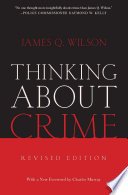
Thinking About Crime
- mentions
- 3
- people
- 3
- podcasts
- 2
- episodes
- 2
- recommendations
- 2
The first one is a lot of the ideas I talked about particularly early in this conversation come from the work of the political scientist James Q Wilson arguably the most influential political scientist of the 20th century my personal ideological hero and his collection of essays thinking about crime was really influential on how I think about crime.
The best things said about it
The first one is a lot of the ideas I talked about particularly early in this conversation come from the work of the political scientist James Q Wilson arguably the most influential political scientist of the 20th century my personal ideological hero and his collection of essays thinking about crime was really influential on how I think about crime.
 Ezra Klein The Ezra Klein Show · Oct 2024
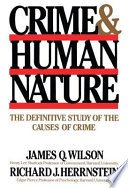
Now Mr. Wilson got famous for writing a 1985 book with the title Crime and Human Nature which argued that criminality was caused by specific genetic factors. There it is.
Why people recommend it
James Q. Wilson's Thinking About Crime is a notable collection of essays exploring conservative perspectives on criminality, social order, and public policy. On an episode of The Ezra Klein Show, Ezra Klein and Charles Fain Lehman discussed the text, with Lehman highlighting it as a major influence on his own worldview. Lehman described the political scientist James Q. Wilson as arguably the most influential political scientist of the twentieth century and his personal ideological hero, specifically pointing to this essay collection as the source for many of the ideas they debated early in the conversation. Lehman recommended the book to illustrate the right-leaning social science perspective on crime and disorder. In a different context on Behind the Bastards, Robert Evans also mentioned Wilson’s academic output, though with a sharp critique. Evans brought up Wilson's broader bibliography—specifically his 1985 book Crime and Human Nature—to provide historical background on the ideas that influenced figures like John DiIulio, using the opportunity to critique the controversial and pseudoscientific claims regarding race and criminality that underpinned much of that era's conservative criminological thought. Together, these discussions present a complex view of Wilson's intellectual legacy, balanced between contemporary conservative admiration and retrospective analytical critique.
Every mention
Charles Fain Lehman the first one is a lot of the ideas I talked about particularly early in this conversation come from the wo… 1
“the first one is a lot of the ideas I talked about particularly early in this conversation come from the work of the political scientist James Q Wilson arguably the most influential political scientist of the 20th century my personal ideological hero and his collection of essays thinking about crime was really influential on how I think about crime”
Ezra Klein The first one is a lot of the ideas I talked about particularly early in this conversation come from the wo… 1
“The first one is a lot of the ideas I talked about particularly early in this conversation come from the work of the political scientist James Q Wilson arguably the most influential political scientist of the 20th century my personal ideological hero and his collection of essays thinking about crime was really influential on how I think about crime”
Robert Evans Now Mr. Wilson got famous for writing a 1985 book with the title Crime and Human Nature which argued that c… 1
“Now Mr. Wilson got famous for writing a 1985 book with the title Crime and Human Nature which argued that criminality was caused by specific genetic factors. There it is.”