Book · 2019 · Political Science
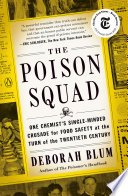
The Poison Squad
One Chemist's Single-Minded Crusade for Food Safety at the Turn of the Twentieth Century
- mentions
- 9
- people
- 3
- podcasts
- 3
- episodes
- 3
- recommendations
- 2
Like like there was an author named um Deborah Blum and she wrote the poison Squad colon one chemist single-minded Crusade for safety at the turn of the 20th century.
What they say about it
- Discusses food adulteration“fakery and adulteration ran rampant”2
The best things said about it
But I mean that whole book that Deborah Blum wrote was about Dr Wy and the poison Squad and the work he did amazing.
Fakery and adulteration ran rampant in other American products as well.
For every food product, the chemistry division could point to a trick involved in its manufacture.
The Poison Squad describes the birth of this subset of the chemical industry.
Where and when it comes up
Mentions per year
How it comes up
Most mentions, by podcast
Why people recommend it
The Poison Squad by Deborah Blum is a historical account detailing Dr. Harvey Washington Wiley's single-minded crusade for food safety at the turn of the twentieth century. On The Ezra Klein Show, Julie Beloo recommended the book as an excellent historical examination of the origins of food regulation. Josh Clark on Stuff You Should Know brought up the book multiple times, praising its coverage of Dr. Wiley and using it to explain the rampant adulteration of historical American foods as well as the severe lack of political will in Congress, where lawmakers were often financially tied to food producers. Robert Evans on Behind the Bastards extensively cited Blum's work across an episode on the Food and Drug Administration. Evans read passages detailing how dairy farmers dangerously increased formaldehyde doses to keep milk fresh, how fakery and adulteration affected countless everyday products like honey, coffee, and flour, and how Wiley and his scientists systematically presented evidence of manufacturing tricks to Congress. Furthermore, Evans utilized Blum's research to recount newspaper reactions and publisher responses surrounding the era's food safety crusades. Through these discussions, podcast contributors underscored the vital historical importance of Wiley's campaign and Blum's thorough documentation of early American public health battles.
Every mention
Josh Clark but I mean that whole book that Deborah Blum wrote was about Dr Wy and the poison Squad and the work he did… 3
“like like there was an author named um Deborah Blum and she wrote the poison Squad colon one chemist single-minded Crusade for safety at the turn of the 20th century”
“that um author Deborah Blum also said that like there was no political will not just because they were in the pockets of like the the food producers they a lot of them most certainly were and basically all of them were getting money from them at the very least”
“but I mean that whole book that Deborah Blum wrote was about Dr Wy and the poison Squad and the work he did amazing”
Julie Beloo Another one is Deb Blum's Poison Squad. 1
“Another one is Deb Blum's Poison Squad.”
Robert Evans And to make that point, I'm going to quote from Deborah Blum again, this time writing in her wonderful book… 5
“And to talk about how this went, I'm going to quote Deborah Blum, who is like the [ __ ] expert on specifically this Quote, "So, dairymen began increasing the dose of formaldehyde, seeking to keep their product fresh for as long as possible."”
“And to make that point, I'm going to quote from Deborah Blum again, this time writing in her wonderful book, The Poison Squad. Quote, "Fakery and adulteration ran rampant in other American products as well.”
“So, I'm going to quote again from The Poison Squad by Deborah Blum. journalism is just for going to war with Spain. Like that's the point. It's to get people to agree to a war with Spain. This book ISN'T ABOUT SPAIN AT ALL.”
“So, this passage from Deborah Blum's book sums up the case that Wiley and his scientists made to Congress. For every food product, the chemistry division could point to a trick involved in its manufacture. Doctors continued to worry over reports of grocer's itch”
“The Poison Squad describes the birth of this subset of the chemical industry in a paragraph that you may recognize some of the names from. In addition to preservatives, companies developed synthetic compounds to make food production cheaper. The sweetener saccharin, discovered in 1879 at Johns Hopkins University”