
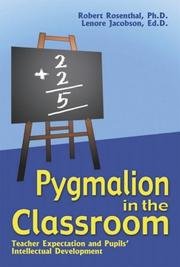
Book · 1968 · Prediction of scholastic success
Pygmalion in the classroom
- mentions
- 6
- people
- 2
- podcasts
- 2
- episodes
- 2
- recommendations
- 0
They published a study in 1968 called Pygmalion in the Classroom, and again they named it after Pygmalion because in that story from Ovid, the sculptor Pygmalion sculpts a beautiful woman, falls in love with her, and loves the statue so much that the goddess Venus says, "I'm going to make you a real-life person.
What they say about it
- Published in 1968“published a study in 1968”4
- Book and paper format“published in '68 as the paper and then also notably as a full book”2
The best things said about it
The study was called Pygmalion in the Classroom published in '68 as the paper and then also notably as a full book.
They published a study in 1968 called Pygmalion in the Classroom.
Uh the study was called pigmon in the classroom publ uh published in 68 as the paper and then also notably as a full book.
Why people recommend it
Pygmalion in the classroom by Robert Rosenthal and Lenore Jacobson is a famous 1968 study and subsequent book examining how teachers' expectations can unconsciously influence student academic performance, giving rise to the psychological concept known as the Pygmalion effect. On an episode of Stuff You Should Know, the hosts discussed the origins of the 1968 study, explaining how the researchers named the project after the classical Greek myth of Ovid in which a sculptor falls so deeply in love with his creation that a goddess brings the statue to life. Josh Clark also referenced Pygmalion in the Classroom during the podcast, pointing out that the initial academic paper was notably published as a full-length book that eventually permeated popular culture and educational psychology. Furthermore, Angela Duckworth mentioned the famous study and its underlying book on No Stupid Questions while breaking down the nuances of intelligence testing and the ways expectations shape human outcomes. Throughout these discussions, the book serves as the foundational text for understanding how psychological self-fulfilling prophecies operate within educational environments and broader societal contexts, illustrating the profound impact that perceived potential can have on actual achievement.
Every mention
Josh Clark so they published a study in 1968 called pigmon in the classroom and again they named it after um pigmon 3
“so they published a study in 1968 called pigmon in the classroom and again they named it after um pigmon”
“uh the study was called pigmon in the classroom publ uh published in 68 as the paper and then also notably as a full book”
“possible that the pigmon in the in the classroom like study yeah”
 Angela Duckworth it's a very famous study and sometimes it's called the pigmallian effect it's like the Greek myth of I thin… 1
“it's a very famous study and sometimes it's called the pigmallian effect it's like the Greek myth of I think it's Prometheus creating a sculpture and then bringing it to life”
Mentioned on the show without a named speaker2
“So they published a study in 1968 called Pygmalion in the Classroom, and again they named it after Pygmalion because in that story from Ovid, the sculptor Pygmalion sculpts a beautiful woman, falls in love with her, and loves the statue so much that the goddess Venus says, "I'm going to make you a real-life person."”
“All right, so where we left off, the study was called Pygmalion in the Classroom published in '68 as the paper and then also notably as a full book.”
Also mentioned in the same episodes
Other mentions (1: passing, ad reads, own books)
“my head is reeling at this point guys I've ordered the book the first edition coming from the UK I made a mental list of my classmates who I'm going to send to your podcast”