Book · 2021 · History
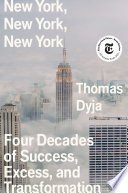
New York, New York, New York
Four Decades of Success, Excess, and Transformation
- mentions
- 6
- people
- 2
- podcast
- 1
- episode
- 1
- recommendations
- 3
The author is Thomas Diga and the book is called New York New York New York four Decades of success excess and transformation if you care even a little bit about New York City possibly even if you don't this book will.
 Stephen Dubner · Freakonomics Radio · Mar 2021 Listen at 1:13
What they say about it
- City mayors and leadership“covers the terms of five New York City mayors”2

The best things said about it
New York, New York, New York covers the terms of five New York City mayors: Ed Koch, David Dinkins, Rudy Giuliani, Michael Bloomberg, and the current one, Bill de Blasio.
Kurt Andersen Freakonomics Radio · Mar 2021 One thing Tom does especially well in this book is show how the city, not just the government but people and neighborhoods and institutions at their best, achieve a delicate Goldilocks balance of order and disorder.
Kurt Andersen Freakonomics Radio · Mar 2021 Why people recommend it
New York, New York, New York by Thomas Dyja is a comprehensive urban history that charts four decades of New York City's transformation, success, and excess through the tenures of five distinct mayoral administrations from Ed Koch to Bill de Blasio. Stephen Dubner and Kurt Andersen dedicated an episode of Freakonomics Radio to exploring the book and interviewing the author. Andersen praised Dyja for brilliantly capturing the city's economic evolution, including how municipal bond sales helped local governments survive past fiscal crises. Furthermore, Andersen highlighted the author's exceptional ability to illustrate how ordinary citizens, neighborhoods, and local institutions historically achieved a delicate, functional balance between order and disorder. Dubner strongly endorsed the book to listeners, asserting that anyone who cares even slightly about urban culture, governance, or the resilience of New York City will find the reading experience deeply engaging. The podcast conversation underscored the text's unique value in explaining how major metropolitan areas continuously reinvent themselves through political, social, and economic turmoil.
Every mention
Stephen Dubner the author is Thomas Diga and the book is called New York New York New York four Decades of success excess… 2
“the author is Thomas Diga and the book is called New York New York New York four Decades of success excess and transformation if you care even a little bit about New York City possibly even if you don't this book will”
“that was Thomas Diga d-y-j-a the author of New York New York New York in conversation with Kurt Anderson”
Kurt Andersen today I'm talking with Thomas digia about his new book New York New York New York for decades of success ex… 4
“New York New York New York covers the terms of five New York City Mayors Ed Koch David Dinkins Rudy Giuliani Michael Bloomberg and the current one Bill de Blasio”
“and so New York New York New York was also an echo of that kind of evolution like other cities the New York government sold municipal bonds to investors to keep itself afloat”
“one thing Tom does especially well in this book is show how the city not just the government but people and neighborhoods and institutions at their best achieve a delicate Goldilocks balance of order and disorder”
“today I'm talking with Thomas digia about his new book New York New York New York for decades of success excess and transformation”