
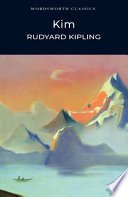
Kim, he was nicknamed Kim because there was a Roger Kipling story, a book I think about a street urchin raised on the streets of India who becomes a spy.
What they say about it
- Reading for book club“for that club”2
The best things said about it
Afghanistan became uh once again as you mentioned Matt a very uh fertile battleground right you can see uh you can see some excellent fiction based on this period of time a work by Richard Kipling it's intensely problematic author but I would I would say a talented poet uh he wrote a novel called Kim which is about a.
He's definitely a racist dude, but he mentions a lot of this in his novel Kim, which is entirely about a boy child spy.
Listeners of this podcast will know that I last attempted to read Rudyard Kipling's Kim for that club, which I did not like, did not finish.
I started reading Rudyard Kipling's Kim for my book club.
While he was on board the steamship that would take him there, he read a book called Kim by Rudyard Kipling.
You could draw a direct line from Kim to James Bond.
Where and when it comes up
Most mentions, by podcast
Why people recommend it
Kim by Rudyard Kipling is a classic novel that follows an orphaned street boy who becomes involved in the espionage and political intrigue of the Great Game in colonial India. The book has drawn varied commentary from several podcast hosts and guests. On Stuff They Don't Want You To Know, Matt brought up the novel as an illustration of historical fiction set during the Afghanistan conflicts, while the host later mentioned it during a discussion on tradecraft and intelligence, acknowledging the author's problematic and racist views. Josh Clark referenced the novel on Stuff You Should Know to explain the origin of the nickname of notorious spy Kim Philby, who was named after the story's protagonist. On Behind the Bastards, Robert Evans noted that Allen Dulles read the book while traveling to India and cited it as an early work of spy fiction that drew a direct thematic line to later cultural creations like James Bond. In contrast, Pamela Paul shared on The Book Review that she attempted to read the novel for her children's book club but ultimately did not like it and failed to finish it, while still acknowledging it as her initial book club selection.
Every mention
Pamela Paul listeners of this podcast will know that I last attempted to read redard kiplings Kim for that club which I… 2
“listeners of this podcast will know that I last attempted to read redard kiplings Kim for that club which I did not like did not finish”
“I started reading redard Kipling Kim for my book club”
Robert Evans While he was on board the steamship that would take him there, he read a book called Kim by Ruard Kipling. 2
“While he was on board the steamship that would take him there, he read a book called Kim by Ruard Kipling.”
“I think it's the great game. I think that's what really because there's all these like Kim, all these novels that you can see, you could draw a direct line from Kim to James Bond.”
Josh Clark Philby Kim, he was nicknamed Kim because there was a Roger Kipling story, a book I think about a street urc… 1
“Philby Kim, he was nicknamed Kim because there was a Roger Kipling story, a book I think about a street urchin um raised on the streets of India who becomes a spy.”
Mentioned on the show without a named speaker2
“Afghanistan became uh once again as you mentioned Matt a very uh fertile battleground right you can see uh you can see some excellent fiction based on this period of time a work by Richard Kipling it's intensely problematic author but I would I would say a talented poet uh he wrote a novel called Kim which is about a”
“yes he's kind of an [ __ ] he's definitely a racist dude uh but he mentions a lot of this in his novel Kim uh which is entirely About a Boy Child spy uh I don't know if it holds up it's been a while since I read it”
Also mentioned in the same episodes

Other mentions (2: passing, ad reads, own books)
“let's not forget that there are still at that point there are still post colonal forces from the game that are involved there are still you know like shout out to Brier Kipling's Kim you know”
“There are still, you know, like shout out to Rudyard Kipling's Kim, you know, the Brits are still there in some capacity. And of course, '67, you've got French Indochina, you've got the US definitely not being there.”