
Book · 2016 · Science
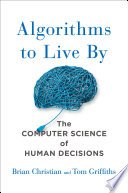
Algorithms to Live By
The Computer Science of Human Decisions
- episodes
- 4
- podcasts
- 3
- people
- 4
- episodes recommend it
- 2
So my second book, which we haven't really touched on at all. We're going to get to, yeah. Yeah, it's called Algorithms to Live By and it looks at things like career decisions from an explicitly algorithmic perspective. So we can get into this more later if you're interested, but there's this paradigm called the explore-exploit trade-off.
What they say about it
- Recommends the book strongly“recommended like crazy”3
- Discusses explore and exploit2
The best things said about it
So there's a great book called Algorithms to Live By and that's how I came across this.
My guest this week is Brian Christian, the author of two of my favorite recent books, Algorithms to Live By and The Most Human Human.
So to complete our arc of starting very theoretically and ending more practically, I'd love to close with one, two, maybe three final examples from your second book, Algorithms to Live By. It's certainly the one that I've recommended like crazy, and I think people would just all love it.
I've seen you write about explore, exploit, that kind of chapter two of that book here and there.
Where and when it comes up
Most episodes, by podcast
4 people who brought it up
Why people recommend it
Algorithms to Live By by Brian Christian and Tom Griffiths explores how computer science algorithms can be applied to human decision-making, everyday problem-solving, and personal dilemmas. Logan Ury mentioned the book on The Diary Of A CEO to credit its influence on her understanding of the secretary problem, while Patrick O'Shaughnessy praised it on Invest Like the Best as one of his favorite reads, frequently recommending it to others. Brian Christian appeared as a guest on the podcast to discuss how the book examines career choices and exploration strategies through an algorithmic lens. Chris Williamson and Steven Pinker also touched on the book while debating optimal dating strategies and stopping problems on Modern Wisdom, and Michael Mayer discussed its explore-exploit framework with Patrick O'Shaughnessy in an earlier episode. Across these various shows, the book is consistently praised for bridging abstract computer science theory with practical, everyday wisdom.
Every mention
Patrick O'Shaughnessy My guest this week is Brian Christian, the author of two of my favorite recent books, Algorithms to Live By… 2
“My guest this week is Brian Christian, the author of two of my favorite recent books, Algorithms to Live By and The Most Human Human.”
“So to complete our arc of starting very theoretically and ending more practically, I'd love to close with one, two, maybe three final examples from your second book, Algorithms to Live By. It's certainly the one that I've recommended like crazy, and I think people would just all love it.”
“I don't know if you got it from the same book, this book Algorithms to Live By, but I've seen you write about explore, exploit, that kind of chapter two of that book here and there.”
Brian Christian So my second book, which we haven't really touched on at all. We're going to get to, yeah. Yeah, it's calle… 1
“So my second book, which we haven't really touched on at all. We're going to get to, yeah. Yeah, it's called Algorithms to Live By and it looks at things like career decisions from an explicitly algorithmic perspective. So we can get into this more later if you're interested, but there's this paradigm called the explore-exploit trade-off,”
Logan Ury so there's a great book called algorithms to live by and that's how I came across this 1
“so there's a great book called algorithms to live by and that's how I came across this”
 Chris Williamson is it seth stevens davidowitz that wrote algorithms to live by are you familiar with that um i'm familiar w… 1
“is it seth stevens davidowitz that wrote algorithms to live by are you familiar with that um i'm familiar with um it's plausible i forget whether that was his exact title he he did write a book that for which i wrote a forward called everybody lies oh no no no it wasn't that one i think actually i think”