Book · 2017 · Gene Editing
A Crack in Creation
- mentions
- 3
- person
- 1
- podcast
- 1
- episodes
- 2
- recommendations
- 0
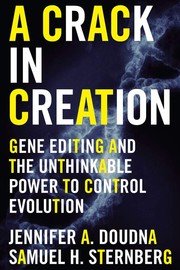
She wrestles with all this in a book she co-wrote with another CRISPR researcher, Samuel Sternberg. It's called A Crack in Creation.
 Stephen Dubner · Freakonomics Radio · May 2018
Why people recommend it
A Crack in Creation by Jennifer A. Doudna and Samuel H. Sternberg is a foundational scientific text detailing the discovery of CRISPR and its profound ethical implications. Stephen Dubner discussed the book extensively across multiple episodes of Freakonomics Radio in 2017 and 2018. Dubner brought up the title of the co-authored work to explore why the researchers chose it, noting that Doudna wrestled deeply with the ethical weight of what they had built. Referencing the text directly, Dubner quoted from the book to highlight how the authors uncovered an incredible molecular machine capable of slicing apart viral DNA with exquisite precision. Throughout these segments, Dubner used the book as a springboard to examine whether their groundbreaking discovery was merely replicating a natural process or actually taking direct control of evolution. By examining the passages co-written by Doudna and Sternberg, the podcast illustrated the monumental shift in modern biology brought about by gene-editing technologies, presenting the book as an essential guide to understanding both the mechanics of CRISPR and the heavy moral responsibilities shared by the scientists who brought it into the world.
Every mention
Stephen Dubner She wrestles with all this in a book she co-wrote with another CRISPR researcher, Samuel Sternberg. It's ca… 3
“She wrestles with all this in a book she co-wrote with another CRISPR researcher, Samuel Sternberg. It's called A Crack in Creation.”
“She wrestles with all this in a book she co-wrote with another CRISPR researcher, Samuel Sternberg. It's called A Crack in Creation. Why the title?”
“So, as you write in the book, we uncovered the workings of an incredible molecular machine that could slice apart viral DNA with exquisite precision.”