Person
Every book Steven Teles recommended on podcasts
Steven Teles appeared on The Ezra Klein Show to discuss governance, political institutions, and the frustrations that arise when government programs fail. At the conclusion of the episode, as part of his book recommendations, Teles highlighted a foundational classic in the study of American civic life. He pointed listeners to the work authored by Theda Skocpol, specifically identifying Voice and Inequality: The Transformation of American Civic Democracy. While mentioning this influential text, Teles also touched upon related themes of inequality and American democracy. By recommending Skocpol's seminal research, Teles directed attention toward how civic organizations, political participation, and structural inequalities shape the United States political landscape. This recommendation aligns closely with the episode's broader academic exploration of state capacity, institutional decay, and the historical mechanics of political power, reinforcing Teles's scholarly focus on public policy, systemic political organization, and the complex relationship between citizens and the modern state.
Books recommended by Steven Teles
-
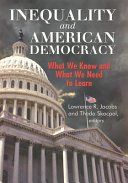
Inequality and American Democracy
Inequality and American Democracy by Lawrence R.
Recommended“the first is a classic by theeta Scotch called voice and inequality the transformation of American Civic democracy”
Where to get it
-
Voice and inequality
Voice and Inequality: The Transformation of American Civic Democracy by Theda Skocpol explores how changes in civic associations and political organizations have impacted democratic representation and the influence of ordinary citizens.
Recommended“the first is a classic by theeta Scotch called voice and inequality the transformation of American Civic democracy”
Where to get it
Books Steven Teles wrote
Appearances
| Episode | Podcast | Date | Books |
|---|---|---|---|
| In This House, We’re Angry When Government Fails | The Ezra Klein Show | 2024-11-22 | 2 |
Other mentions (1: passing, ad reads, own books)
“what happened is that the professions became liberalized but liberalism also became professionalized to the point where both all those institutions including government institutions are now seen as kind of part of the democratic party extended Network and Republicans almost by default have become the party of being opposed to those institutions and suspicious of them and skeptical”