
Person
Every book Norman Finkelstein recommended on podcasts
Across 3 podcasts. Every show Norman Finkelstein appears on, in one place — not just one.
Norman Finkelstein’s most recommended books
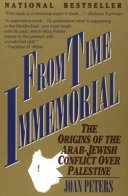
- From Time Immemorial by Joan Peters
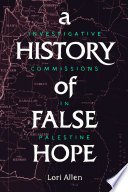
- A History of False Hope by Lori Allen
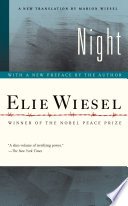
- Night by Elie Wiesel
- One State, Two States by Benny Morris
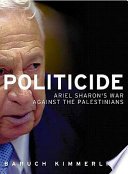
- Politicide by Baruch Kimmerling
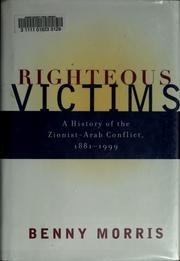
- Righteous victims by Benny Morris
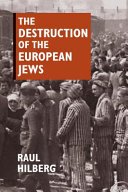
- The Destruction of the European Jews by Raul Hilberg
Norman Finkelstein is an academic and author who appears on podcasts to discuss politics and history. During episodes of the Lex Fridman Podcast and Candace, he recommended and critiqued several notable works. Finkelstein recommended Lori Allen's A History of False Hope to counter claims regarding Palestinian reliance on war. He heavily critiqued Joan Peters's From Time Immemorial, detailing its central thesis that Palestine was empty before explaining how he later debunked it as a hoax. Furthermore, Finkelstein discussed Baruch Kimmerling's Politicide concerning Gaza, and he talked about his own book I'll Burn That Bridge When I Get to It in the context of cancel culture and the woke phenomenon. He also referenced Elie Wiesel's Night to discuss historical critiques surrounding described scenes, Benny Morris's Righteous Victims regarding territorial displacement, and Raul Hilberg's The Destruction of the European Jews to argue against the perceived responsibility of Palestinian Arabs for the Holocaust.
Books recommended by Norman Finkelstein
-
From Time Immemorial
From Time Immemorial by Joan Peters is a controversial 1984 book that argued Palestine was largely empty before Jewish colonization and that Arab populations arrived later.
Critiqued“And while writing the doctoral dissertation, there was a book that came out way before your time. It was called From Time Immemorial, and the major thesis of the book was that Palestine was empty.”
Where to get it
-
A History of False Hope
A History of False Hope is a detailed historical and political analysis by Lori Allen that examines the long-standing engagement of Palestinians with international law and diplomacy.
Recommended“You may want to consult the book published last year by Lori Allen, "A History of False Hope," which discusses in great detail the consistent engagement”
Where to get it
-
I'll Burn That Bridge When I Get to It
I'll Burn That Bridge When I Get to It by Norman Finkelstein is a provocative critique addressing contemporary identity politics, cancel culture, and the state of academic freedom within modern institutions.
Discussed“It was on um cancel culture. This book okay and Glenn and I was very critical of the cancel culture, the woke phenomenon.”
Where to get it
-
Night
Night by Elie Wiesel is a dark and powerful memoir detailing the author's harrowing experiences in the Holocaust.
Discussed“He describes some scenes which Raul Hillberg Raul Hberg the person I mentioned uh to you from the person who defended me and for reasons which still remain except integrity you know which is so rare. He was the chief historian for the Holocaust memorial in Washington. Elie Weisel personally picked him because Weisel knew he knew his stuff. And”
Where to get it
-
One State, Two States
Critiqued“Now, I read carefully your book, "One State, Two States." With all due respect, absolutely a disgrace.”
Where to get it
-
Politicide
Discussed“He writes a little book. Little book is called Politicite. How does he describe Gaza?”
Where to get it
-
The Destruction of the European Jews
Discussed“if you look at Raul Hilberg's three volume classic work, "The Destruction of the European Jewry," he has in those thousand plus pages, one sentence,”
Where to get it
Books Norman Finkelstein wrote
Appearances
Other mentions (3: passing, ad reads, own books)
“I lived in this tiny studio apartment, like... Raskolnikov, and crime and punishment. And I'm pacing the apartment back and forth, back and forth, I'm saying, I did it.”
“I devote the first chapter of the new book, God is His Gravediggers, the chapter is called Rape Fantasies. I go through all the alleged evidence and I find it not only non-persuasive, I find the evidence non-existent.”
“The last book I wrote was called I Accuse.”