
Person
Annie Jacobsen's book recommendations
Across 8 podcasts. Every show Annie Jacobsen appears on, in one place — not just one.
Annie Jacobsen’s most recommended books
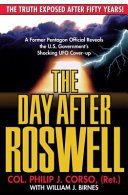
- The Day After Roswell by Philip J. Corso
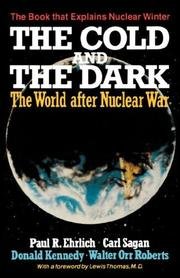
- The Cold and the Dark by Paul R. Ehrlich, Carl Sagan, Donald Kennedy, Walter Orr Roberts
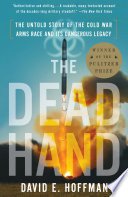
- The Dead Hand by David Hoffman
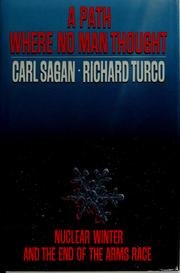
- A path here no man thought by Carl Sagan, Richard Turco
- Bleak House by Charles Dickens
- Hiroshima by John Hersey
- MOBY-DICK; or, THE WHALE by Herman Melville
- The Button by William J. Perry
- The Decameron by Giovanni Boccaccio
- The Road by Cormac McCarthy
Annie Jacobsen is an American investigative journalist, author, and a 2016 Pulitzer Prize finalist. She writes for and produces television programs, including Tom Clancy's Jack Ryan for Amazon Studios and Clarice for CBS. She was a contributing editor to the Los Angeles Times Magazine from 2009 until 2012. Throughout her podcast interviews, Jacobsen frequently discussed and recommended her own work, Nuclear War, urging listeners and hosts like Joe Rogan and Jordan Harbinger to read it for insights into the terrifying first seconds and realities of a nuclear scenario. Beyond her own writing, she recommended David Hoffman's The Dead Hand on The Jordan Harbinger Show, pointing to his reporting on the Soviet nuclear retaliation system. On the Lex Fridman Podcast, she discussed Carl Sagan's The Cold and the Dark, highlighting its essays on the concept of nuclear winter. Throughout these appearances, she also touched upon other historical works, including Philip J. Corso and William J. Birnes's The Day After Roswell, in the context of how cultural depictions of nuclear conflict influenced leaders like President Reagan.
Books recommended by Annie Jacobsen
-
Nuclear War
Annie Jacobsen's nonfiction book Nuclear War: A Scenario provides a chilling, unsparing countdown and thorough examination of what a global nuclear exchange would actually look like.
Discussed“one of the most prolific comments I got from readers of Nuclear War was exactly what you're talking about. They said, 'You know what? I read your book. It was terrifying. I stayed up all night reading it. I want to go in the flash of blinding light.'”
Where to get it
-
The Day After Roswell
The Day After Roswell by Philip J.
Discussed“And one night he was watching ABC television movie called The Day After. It envisioned a nuclear war between Russia and the United States. And it terrified him.”
Where to get it
-
The Cold and the Dark
The Cold and the Dark by Paul R.
Recommended“Carl Sagan talked about that in this amazing book he wrote with two scientist colleagues called "The Cold and the Dark."”
Where to get it
-
The Dead Hand
The Dead Hand by David Hoffman is a comprehensive historical account of the secret Soviet nuclear weapons program and the arms race during the Cold War.
Recommended“And he created a system and again, this is reported by a Washington Post reporter named David Hoffman. He wrote a brilliant book called the dead hand.”
Where to get it
-
A path here no man thought
Discussed“Words of Carl Sagan, who is the author of Nuclear Winter.”
Where to get it
-
Biological War
Biological War by Annie Jacobsen is a sobering investigative nonfiction book that examines government plans, potential outbreaks, and the terrifying realities surrounding genetically modified pathogens and modern warfare.
Discussed“But I think people that read Biological Warfare is a scenario, and it's just one scenario, it's not only scenario, will be astonished when they learn of the government's own plans in the event of an outbreak or an incident of a genetically modified pathogen.”
Where to get it
-
Bleak House
Bleak House by Charles Dickens is a sprawling and intricate Victorian novel that famously critiques the British judicial system through the interminable chancery lawsuit of Jarndyce and Jarndyce.
Discussed“What's your favorite novel? Moby Dick or Blee House if I had to say.”
Where to get it
-
Hiroshima
John Hersey's groundbreaking work of narrative reportage, Hiroshima, documents the devastating atomic bombing of the Japanese city through the personal accounts of six survivors.
Discussed“and someone asked me or rather stated that my book nuclear war a scenario was clearly influenced by John Hershey's Hiroshima and Cormick McCarthy's the road and I thought what absolutely both of those books I have read more than once each of those books”
Where to get it
-
MOBY-DICK; or, THE WHALE
Moby-Dick by Herman Melville is an epic American novel that chronicles the obsessive, self-destructive quest of Captain Ahab to hunt down the giant white whale that maimed him.
Discussed“What's your favorite novel? Moby Dick or Blee House if I had to say.”
Where to get it
-
Surprise, Kill, Vanish
Surprise, Kill, Vanish by Annie Jacobsen is an investigative history book that chronicles the clandestine origins, evolution, and operations of the CIA's elite paramilitary Ground Branch.
Discussed“Someone was asking me about my book, 'Surprise, Kill, Vanish,' about the CIA's paramilitary guys, the Ground Branch, the snake eaters.”
Where to get it
-
The Decameron
Discussed“There's a famous book called The Decameron by Giovanni Boccaccio and an Italian notary and he writes about what it was like at that time and and copies”
Where to get it
-
The Pentagon's Brain
The Pentagon's Brain by Annie Jacobsen is a comprehensive nonfiction investigation into the origins, history, and profound technological impact of the Defense Advanced Research Projects Agency, commonly known as DARPA.
Discussed“That now there is more power in the hands of six private individuals. Full stop. Then the government organization that I myself have written about DARPA, which I used to say when I wrote the book The Pentagon's Brain, which published, you know, 10 years ago.”
Where to get it
-
The Road
The Road by Cormac McCarthy is a bleak, post-apocalyptic novel that follows a father and his young son as they walk across a burned America, striving to survive while holding onto their morality.
Discussed“and someone asked me or rather stated that my book nuclear war a scenario was clearly influenced by John Hershey's Hiroshima and Cormick McCarthy's the road and I thought what absolutely both of those books I have read more than once each of those books”
Where to get it
Books by Annie Jacobsen
-
Nuclear War
-
Area 51
-
Operation paperclip
-
The Pentagon's Brain
-
Surprise, Kill, Vanish
-
Phenomena
-
First Platoon
-
Biological War
Appearances
Other mentions (72: passing, ad reads, own books), the 30 most recent
“So, when I was writing Area 51, I interviewed the CIA's first director of the Directorate of Science and Technology.”
“I write about this in Operation Paperclip. Not even a question. We brought Nazi scientists who were running Hitler's biological weapons program over here.”
“And so, that really threw me because being someone who essentially wrote the book on DARPA called The Pentagon's Brain, I was a Pulitzer finalist for it.”
“I am going to the Senate to talk to senators about what I write about in my book Nuclear War.”
“My first six books were written in the past tense. Like, you know, the Nazi scientists who came to America, Area 51, um The Pentagon's Brain. The Nuclear War and Biological War are written in the future.”
“My first six books were written in the past tense. Like, you know, the Nazi scientists who came to America, Area 51, um The Pentagon's Brain.”
“My first six books were written in the past tense. Like, you know, the Nazi scientists who came to America, Area 51, um The Pentagon's Brain.”
“I'm pretty sure that the precipice came out in 2019. Uh so, before COVID and it in order to write the book and to have the research and to be able to get to the stage where Yeah, top left.”
“I wrote biological war a scenario, not biological war the only scenario. And in my acknowledgements part of the book, I mention how in some of my interviews”
“He had read Nuclear War, my book Nuclear War, and I said he said, "Annie, unlike Nuclear War, biological warfare will be deeply nightmarish.”
“But I mean, one of the biggest takeaways that readers came back at me with after reading nuclear war as an area was, I just want to die in the immediate blast because, you know, it's like that Nikita Kruev quote, the survivors would envy the dead.”
“According to Stratcom, in biological war, I take the readers from outbreak to anarchy in six days because anarchy and insurrection is the real threat.”
“He's now dead, but I interviewed him for my book, Area 51, which was sort of my first foray into nuclear weapons.”
“I quote him in nuclear war scenario where he says this is an irrational concept which it is that any person let alone one single man the president of the United States would make a decision which we now know from war games would essentially end civilization.”
“Yes. But if you read nuclear war closely, as I know it sounds like you did, you perhaps if well if you're me because I wrote it, you come to the conclusion that this is madness.”
“My job is as a national security reporter to tell you the story of what would happen, what could happen in nuclear war, a scenario, not nuclear war, the only scenario.”
“And that is why in nuclear war scenario I chose the mad king scenario which is North Korea launching because this is a very new and formidable foe if you will a nuclear armed superpower with rogue tendencies and they're not ruled by a committee right I think of committees as more conservative on average than individuals.”
“But very specifically in nuclear war scenario, I don't get involved with geopolitics. Tyler, I take readers from nuclear launch to nuclear winter and it happens in 72 minutes.”
“Is when I was writing Area 51, I interviewed the first director of the CIA's Department of Science and Technology. His name was Dr. Bud Won.”
“And when I was interviewing Dr. wheelon for Area 51. My handler, when you interview these kind of former CIA guys you have, I call them a handler. They're called like a liaison. And uh this person said to me, "You may not talk to, you know, Dr. Wheel will answer all your questions about 51, about the spy planes,”
“The short version is I report in Area 51 that they were not UAPs, that they were something else, a terrible, you know, human experiment program. But, you know, that really is a longer conversation because it's so dark, so ugly, and deeply controversial. But I have no reason to believe that it that you know offplanet extraterrestrial beings or”
“you have to read the whole Area 51 book to kind of swallow that. Um but that is that was the position he maintained until he died.”
“He was the main character in my book about the CIA's paramilitary called Surprise, Kill, Vanish.”
“It's called Nuclear War. Yeah, um, what nuclear war?”
“it's called nuclear war yeah um what nuclear war a scenario and a very plausible scenario”
“it's why I think the response to this book it's been out for 3 months has been so extraordinary”
“I mean the book is really about nuclear launch to nuclear winter but the buildup IS fascinating”
“I get into that in the end of the book. So I write the book and essentially three acts: like the first 24 minutes, the next 24 minutes, the last 24 minutes, and then nuclear winter.”
“I get into that in the end of the book so I write the book”
“So nuclear winter is very well described by a fellow called Professor Brian Toon, who I interview in the book.”