
Person
Every book Andrew Yang recommended on podcasts
Across 2 podcasts. Every show Andrew Yang appears on, in one place — not just one.
Andrew Yang is a guest on podcasts who frequently discusses political ideology, social issues, and government. During an appearance on Breaking Points, Andrew Yang mentioned Jonathan Haidt and his well-known book, The Anxious Generation, while talking about banning smartphones in middle schools and the negative impact of devices on children. Later, while speaking on The Rich Roll Podcast, Andrew Yang again referenced Jonathan Haidt, specifically highlighting The Righteous Mind and its psychological studies exploring the differences between Democrats and Republicans. On the same podcast, Andrew Yang also referenced Ezra Klein's book Why We're Polarized to explain historical periods when the Democratic and Republican parties were far less ideological and shared similar policy outlooks.
Books recommended by Andrew Yang
-
The Anxious Generation
The Anxious Generation by Jonathan Haidt investigates the profound psychological and developmental toll that modern smartphones, social media, and a decline in unsupervised play have inflicted on today's youth.
Discussed“Crystal, I'm so glad that you're trying to get smartphones out of your your kids' middle school or junior high. I'm friends with Jonathan Haidt who obviously has made history with the anxious generation and any parent knows, I'm a parent.”
Where to get it
-
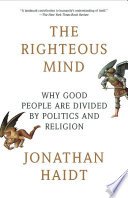
The Righteous Mind
The Righteous Mind by Jonathan Haidt is an insightful exploration of moral psychology that investigates why good people are divided by politics and religion.
Discussed“And that harkens to the work of Jonathan Hite, who looms large in your book. You cite him frequently, and his studies are quite fascinating in terms of the psychological differences between Democrats and Republicans. So can you elucidate that a little bit? Yeah. Jonathan is such an incredible philosopher, really. He's a friend as well. And his work on”
Where to get it
-
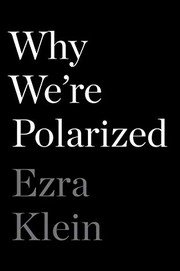
Why We're Polarized
Why We're Polarized by Ezra Klein is a comprehensive analysis of the structural, political, and psychological forces driving extreme partisan division in the United States.
Discussed“As our Klein's book, Why We're Polarized, he goes through the fifties, the sixties, where the Democrats and Republicans are essentially interchangeable. They have like the same outlook, the same policy prescriptions.”
Where to get it

Books Andrew Yang wrote
Appearances
| Episode | Podcast | Date | Books |
|---|---|---|---|
| Andrew Yang: Phones Should Be BANNED In Schools | Breaking Points | 2025-10-23 | 1 |
| Andrew Yang On Grace, Tolerance & Human-Centered Government | The Rich Roll Podcast | 2021-11-08 | 2 |
Other mentions (3: passing, ad reads, own books)
“really I try to make this point in my book that podcasts are closer to the way humans interact in real life”
“so one of my discoveries that I try and Detail in the book is that all politics is tribal and that the way I communicate and think in terms of facts and solutions and technology and reason I ended up discovering a new political language that spoke to you and your son and a body of other Americans many of”
“Reading books by Jonathan Hyatt and Ezra Klein and Lawrence Lessig and Catherine Gale and Michael Porter, and coming to the conclusions that I came to in this book forward. And when you come to these conclusions, then you have to come to grips with, OK, what is an actual way out?”