
Person
Every book Alec Ross recommended on podcasts
Across 2 podcasts. Every show Alec Ross appears on, in one place — not just one.
Alec Ross discussed his books across podcast appearances, highlighting the premises and underlying themes of his work. On The Realignment, he talked about The Raging 2020s, explaining that the book did not predict the future but instead laid out a series of choices and examined the global tax system alongside government progress. On the a16z Podcast, he described his earlier work, The Industries of the Future, as a mostly optimistic book that carefully avoided utopian and dystopian extremes. He noted that a major portion of that book focused on improbable innovation and the changing economic and technological landscape of the coming years.
Books recommended by Alec Ross
-
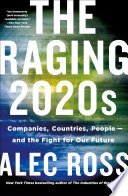
The Raging 2020s
Discussed“and so the raging 2020s does not say what's going to happen but rather it lays out a series of choices in front of us”
Where to get it
-
The industries of the future
The Industries of the Future by Alec Ross is a forward-looking business and technology book examining the economic trends and technological shifts that will shape coming decades.
Discussed“yes so the the industries of the future is a mostly is a fairly optimistic book it's not a utopian book it's not a bedwetting dystopian book”
Where to get it
Books Alec Ross wrote
Appearances
| Episode | Podcast | Date | Books |
|---|---|---|---|
| 161 | Alec Ross: Welcome to the Raging 2020s | The Realignment | 2021-09-23 | 3 |
| a16z Podcast: Open vs. Closed, Alpha Cities, and the Industries of the Future | a16z Podcast | 2016-02-19 | 2 |
Other mentions (3: passing, ad reads, own books)
“no i greatly appreciate that this this book the raging 2020s just published um and you know my prior work is the industries of the future”
“no i greatly appreciate that this this book the raging 2020s just published um and you know my prior work is the industries of the future”
“the reason I wrote this book the reason I wrote the industries of the future comes from the experience of having grown up in a poor rural part of the United States West Virginia”