Book · 2012 · History
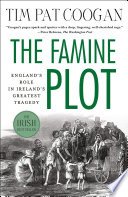
The Famine Plot
England's Role in Ireland's Greatest Tragedy
- mentions
- 12
- person
- 1
- podcast
- 1
- episodes
- 2
- critical mentions
- 0
Um, so the famine plot goes into greater detail about how Travalian personally intervened to exacerbate the famine in the name of his precious free market principles.
What they say about it
- Quotes from the book“going to quote from The Famine Plot here”11
The best things said about it
I mean, the famine plot is a good one. Kugan frames it very much as like, yeah, it was like people meant for this [ __ ] to go down. Yeah, a famine plot.
In the famine plot, Tim Patkan writes, "Irish trade was crippled by the partial conquest. Instead of being developed, valuable cattle, fishing, and woolen industries were taxed out of existence when they came into competition with either British trading interests or her military concerns.
Why people recommend it
The Famine Plot is a historical examination written by Tim Pat Coogan that argues British policies during the Irish Famine amounted to a deliberate genocide. On two consecutive episodes of Behind the Bastards dedicated to the topic, host Robert Evans drew heavily from Coogan's research to explain the catastrophic events of the 1840s. Evans quoted passages from the book to illustrate how locally managed workhouses failed the starving population, how troops and police ruthlessly evicted families from their homes, and how institutions like the Vatican contributed to Irish relief efforts. The host used Coogan's text to detail the actions of Charles Trevelyan, asserting that Trevelyan personally intervened to exacerbate the suffering in strict adherence to free market principles. Furthermore, Evans cited Coogan's analysis of how centuries of partial conquest and oppressive laws crippled Irish trade, cattle, fishing, and woolen industries by taxing them out of existence whenever they competed with British interests. Evans praised Coogan's framing of the famine, validating the author's argument that the devastation was an intended outcome of systemic policy rather than a mere natural disaster. Throughout the episodes, Coogan's work served as the primary scholarly spine for the podcast's narrative, providing listeners with a deeply critical look at the political decisions that shaped one of Ireland's darkest historical tragedies.
Every mention
Robert Evans And this quote from Kugan's book makes it clear how badly this situation tended to work because you have th… 12
“And this quote from Kugan's book makes it clear how badly this situation tended to work because you have these kind of local landlords who are managing these workhouses.”
“And I'm going to quote from the famine plot here. On the morning of March 30th, 1846, a detachment of troops and police showed up to eject the people from their homes.”
“And I'm going to read a quote here uh from Tim Pat Kugan about why. So we're going to start with the Pope. The people of Rome contributed generously to Irish relief as did a few cardinals.”
“a line in Tim Pat [clears throat] Kugan's book that I found interesting. I can't vouch for it cuz I'm not Irish, but he points out that like obviously, you know, in World War I, Irish soldiers are a major part”
“Um, so the famine plot goes into greater detail about how Travalian personally intervened to exacerbate the famine in the name of his precious free market principles.”
“I mean, the famine plot is a good one. Kugan frames it very much as like, yeah, it was like people meant for this [ __ ] to go down. Yeah, a famine plot.”
“I'm going to read a quote by Irish scholar Tim Pat Kugan in his book, The Famine Plot. From the Vatican's point of view, the attraction of this arrangement lay in the fact that Rome would exert its authority through the appointment of handpicked bishops”
“In the famine plot, Tim Patkan writes, "Irish trade was crippled by the partial conquest. Instead of being developed, valuable cattle, fishing, and woolen industries were taxed out of existence when they came into competition with either British trading interests or her military concerns”
“Tim Patkugan writes, "However rebellion spearheaded by the United Irishmen was bloodily suppressed. At the time it was frequently said that the 1798 rebellion was secretly encouraged by direction of the English prime minister William Pitt so that it would go off halfcocked”
“I'm going to continue that quote from Tim Patkugan, a respected historian of the period, has written, "1798 is the most violent and tragic event in Irish history between the Jacobite wars and the great famine. In the space of a few weeks, 30,000 people, peasants armed with pikes and pitchforks, defenseless women and children, were shot down”
“Appalachia and it's like honor culture and all of the and Ireland kind of their version of that is called faction fighting which is there's this is a fascinating thing I had no idea was happening um but it it starts in the county temporary uh in the early 1800s and it quickly spreads all over the island and in”
“Um Tim Pat Kugan writes, "He deserves to be regarded as the founder of the modern peaceful civil rights movement. His hatred of oppression was universal. "My heart walks abroad," he said. "And wherever the miserable is to be suckered, and the slaves to be set free, there my spirit is at home”