
Why people recommend it
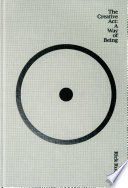
The Creative Act: A Way of Being by Rick Rubin is a widely discussed book that reframes creativity not as a rare genetic ability, but as a fundamental way of engaging with the world. Steve Levitt featured the work extensively across multiple episodes of People I (Mostly) Admire, sharing his concluding reflections on its transformative messages and quoting the early central premise that creativity is accessible to everyone rather than reserved for a chosen few. Joe Rogan brought up the fascinating book on The Joe Rogan Experience while discussing individuals who cultivate cool and creative environments within their homes. Andrew Huberman also highlighted the title on Huberman Lab as a top recommended read to stimulate thought and process creative energy. Throughout these podcast appearances, hosts and guests emphasized that the book transcends traditional music industry expectations, offering universal insights into the artistic process and human expression. Listeners are repeatedly directed to its pages for guidance on unlocking inspiration, overcoming mental blocks, and approaching daily life with a renewed sense of imagination and purpose, making it a modern touchstone for anyone seeking to cultivate a more inventive and fulfilling existence.
Who recommended it
- Steve Levitt Recommended
- Andrew Huberman Recommended
- Rick Rubin Discussed
- Ryan Holiday Discussed
- Joe Rogan Recommended
- David Senra Discussed
- Anjney Midha Discussed
- Lex Fridman Discussed
- Ezra Klein Discussed
- Tom Segura Discussed
- Dr Rangan Chatterjee Discussed
- Mike M. Discussed
- Angela Duckworth Discussed
- Rainn Wilson Discussed
Steve Levitt — 14 mentions
“His new book is entitled The Creative Act, A Way of Being. And it's not at all the book you might expect from a big wig in the music industry. It's a book about I honestly can't even explain what the book is about, even though I loved it.”
“There was a lot in Rick Rubin's book that spoke to me. But if there's one big message, one that I would love for you to carry away, it's something early in the book. He writes, "Creativity is not a rare ability."”
“His new book is entitled The Creative Act: A Way of Being, and it's not at all the book you might expect from someone in the music industry. It's a book about...”
“But before we get into the book, I'm hoping he'll explain to me how a white college student in the early 1980s became foundational to the development of hip-hop.”
“I have to confess I know very little about the music industry, and it never would have occurred to me to invite you on the show, but as we were brainstorming potential guests, someone in the meeting noted that Rick Rubin's got a new book out, and he's legendary.”
“I picked up a copy of your book knowing literally nothing about it, and I was honestly shocked.”
“This book isn't a memoir or an expose; it's a book of philosophy, a meditation, and it spoke deeply to me from the very first pages.”
“I gotta say, I rarely have been so surprised by a book in such a positive way.”
“Before we talk about the book, can I ask you an embarrassing question?”
“Reading your book, I suddenly stopped in my tracks.”
“But somewhere towards the end of your book, I broke out in this big smile, and I thought, 'Maybe I am an artist.'”
“You have an interesting point in the book about being like a spectator to your own failures.”
“There was a lot in Rick Rubin's book that spoke to me.”
“But if there's one big message, one that I would love for you to carry away, it's something early in the book.”
Andrew Huberman — 7 mentions
“As I went into your book, the example that you give, this idea that ideas and creativity are a little bit like a cloud.”
“In your book, you describe, again, when you think about the creative process as a the cloud.”
“Rick Rubin talked a little bit about this in his book the creative act like we need to be on the front end of the of the vehicle experiencing space and time”
“I have to introduce you to my good friend Rick Rubin who's been on this podcast a few times because he he wrote the creative act”
“I’ll throw one out: Rick’s book, 'The Creative Act: A Way of Being.' But in addition to that book, what are some other books you recommend to stimulate thought or for health purposes—things you've found particularly beneficial in book form?”
“We also spent some time talking about Rick's new book, which is all about creativity and ways to access creativity. The title of the book is The Creative Act: A Way of Being, by Rick Rubin.”
“Please also be sure to check out his new book, The Creative Act-- A Way of Being by Rick Rubin.”
Rick Rubin — 5 mentions
“I can remember when I started the whole endeavor about eight years ago, meeting with publishers and explaining how I envisioned the book, all of them said like, "Yeah, but you're going to tell stories about in the studio and you're going to talk about Johnny Cash and you're going to talk about Jay-Z."”
“My original focus was the idea of writing a book and it came and I thought it's a book that I want to get done very quickly which is very different than the creative act which was 8-year project.”
“One of the things I talk about in the book is that, because it is a difficult thing to do, it’s fun to play, and it’s fun to think maybe it’s not the best it could be yet, to use whatever the next project is going to be as motivation to finish the one you’re working on now. I'm working”
“One of the things I discovered while working on the book was that we aren't required to treat the different phases of work in the same way, whereas before, I did. In the past, everything was in this state of play.”
“ANDREW HUBERMAN: The chapter on self-doubt was particularly interesting to me. RICK RUBIN: Tell me what it says because I can’t remember.”
Ryan Holiday — 3 mentions
“Well, I think your I think your book is a great your first book of course is a great contribution to that and I think this new one's a uh for something that started as a joke, a a nice little uh uh a nice little thing...”
“It's funny you bring up Rick Rubin, that's a good example, right? Here's a guy who through his music, you know, probably 100 million albums, billions and billions of streams and radio listens, and that book is a hit.”
“so thank you very much for this and I I I love the book I think the book is incredible”
Joe Rogan — 3 mentions
“that's the whole premise of the Steven pressfield book The War the war of art I haven't read that one I just started reading the Rick Ruben one”
“He wrote this book on creativity, it's really good, it's really fascinating.”
“he wrote this book on creativity it's really good it's really fascinating”
David Senra — 2 mentions
“So, I write biographies about him. I read his book Creative Act. You read Creative Act? Yes. Okay.”
“This is Rick Rubin. Like you and I we just talked about this we just both read his book Creative Act. And towards the end of that book, he has this thing called like the house on the mountain test.”
Anjney Midha — 2 mentions
“Like the the uh in the creative act, the the subtitle is um a way of being.”
“Like the the um in the creative act, the the subtitle is um a way of being.”
Lex Fridman — 2 mentions
“But you've also mentioned somebody you admire is Rick Rubin and his book of "The Creative Act." It has some really interesting ideas, and one of them is to accept self-doubt and imperfection.”
“But you've also mentioned someone you admire is Rick Rubin and his book 'The Creative Act.' It has some really interesting ideas, and one of them is to accept self-doubt and imperfection.”
Ezra Klein — 2 mentions
“Reuben just came out with this really fascinating unusual book called the creative act a way of being expected stories of late nights in the studio with famed musicians”
“so I normally think it's cliche to begin by asking anybody about the title of their book but but I do think there's an interesting interaction for you between the the title and subtitle the creative act and a way of being”
Tom Segura — 1 mention
“I remember reading that book he put out, ANDREW HUBERMAN: "Creative Act". TOM SEGURA: And he was like, there's something about-- I'm paraphrasing here, but about having your antenna up.”
Dr Rangan Chatterjee — 1 mention
“I’ve realized that if I choose the guests I really want to speak to selfishly, that’s how I best serve my audience. This is akin to what Rick Rubin talks about in his book, isn’t it?”
Mike M. — 1 mention
“Rick Rubin the legendary music producer wrote a book called the creative act a way of being”
Angela Duckworth — 1 mention
“Rick Rubin, the legendary music producer, wrote a book called The Creative Act: A Way of Being; he talks so much about how creativity will flow through us if we just give ourselves space to observe without having to pay attention to a specific thing.”
Rainn Wilson — 1 mention
“I mean, it's really amazing this the Creative Circle book by uh Rick Rubin has been this runaway bestseller. Um and it's a really out there kind of book in a lot of ways, you know, and that's really exciting.”
Mentioned on the show without a named speaker — 15
“This is a book that I've now read three times from cover to cover, and I'm now reading it a fourth time. Because it is so rich with wisdom and information that I'm applying in multiple domains of my life, not just my work but my everyday life.”
“And so whether or not you consider yourself somebody creative or not, or whether or not you seek to be more creative, Rick's book and today's conversation sheds light on what I believe to be the fundamental features of what makes us human beings. That is what allows us, unlike other animals,”
“But as I went into your book, which I've done twice. I've read it twice, and by the way, I feel so blessed and honored to have gotten an early copy from you, or a final copy early that is.”
“When I was reading your book, I was thinking about there's a set of things to follow, things to pay attention to-- you talk about this-- things to access, that none of the creative process comes from just within us. It can, but it's always being fed by things outside of it.”
“ANDREW HUBERMAN: I was thinking in your book you describe, again, when you're thinking about the creative process as a cloud. For me, again, it serves as such a powerful anchor.”
“And then I think about the biology, the neurobiology of like strategy formation or strategy implementation and then almost by sheer luck or miraculously, I turn a few pages later into the book, and there's a description of how animals that are trying to accomplish something—eat, mate, find water, accomplish the requirements of living—require a narrow visual focus.”
“And you said your description of source is something within us. I don't know if I would say that was accurate. It's definitely in us too, but it's not only in us.”
“I recall distinctly that in the book, you described how the physical world is constrained by the laws of physics and certain things. The imagination is unconstrained. I think I have this right; you said the work sets somewhere between those—it’s neither one nor the other.”
“Aside from your daily routines, when it comes to someone going from project to project, and you know you're going to be doing work with somebody, it could be your own work. And we'll talk about the writing of this book and its structure, which is very unique.”
“So this relates to an amazing chapter and series of writings in your book that I'm not going to describe because I want people to find it for themselves about disengaging, about disengaging from the process. One question I had as I read that chapter, and as you're saying this now, is even though you're disengaged, do you believe that”
“In the book, you talk about this notion of entertaining the idea of the opposite being true. There are not only emerging but established fields of psychology that are making great ground, I think, into the human psyche; Byron Katie's work and others.”
“The other thing that I used over time to reset this ability to think in a structured way without it feeling like it was overcoming me, maybe even access the same thing in some ways that you're accessing with wrestling, was I like to stare at aquaria. I like to go to aquariums or I'd build aquariums.”
“But I've seen a little bit of the evolution of it, and I've seen it now and read through it in its final form twice, as I mentioned. I'm going to continue to read through it again.”
“It is one of those books that is so filled with gems, like every chapter. I could take notes on this and take notes on that, and it's assembled in a very digestible way that allows people to extract the meaningful parts in every chapter.”
“Please also be sure to check out his new book, The Creative Act: A Way of Being by Rick Rubin.”
Also mentioned in the same episodes
- Meditations
- Tao Te Ching
- The Daily Stoic
- The War of Art
- 5 Types of People Who Can Ruin Your Life
- A Farewell to Arms
Other mentions (14: passing, ad reads, own books)
“One of the things I talk about in the book is um because it is a difficult thing to do cuz it's fun to play and it's fun to maybe it's not the best it could be yet, you know, um to use whatever the next project is going to be as motivation to finish the one you're working on”
“And one of the things that I discovered through working on the book was we're not required to treat the different phases of work in the same way.”
“The Way of Code is a book about vibe coding.”
“maybe this is why my my friend Rick Rubin whose name is sort of synonymous with creativity because he wrote that amazing book the creative act is so into sky and clouds and sunsets and space open space”
“and it's what the book's about is like really for people to trust artists to trust in themselves make something that speaks to themselves and hopefully someone else will like it”
“the book is called the creative act a way of being Rick Rubin it's available now”
“This past year, Rick also authored his first book, which is a truly incredible exploration into the creative process. His book is entitled 'The Creative Act: A Way of Being.'”
“You have to find some way to be present and both very committed and also, as you talk about in the book, kind of detached from all of that external stuff. Absolutely, and I recommend that artists engage or re-engage with why they wanted to do it in the first place and really find their love.”
“If we put our—one of the things I recommend in the book is like creating the equivalent of creating office hours, having a schedule to work. Where you say I'm going to sit down for this could be 20 minutes, could be three hours; it's up to you what that window is and how you want to do it.”
“It’s the book I wanted to write; that’s one of the things about it is like—and I think when we did talk about it all those years ago, that was probably what you said. It’s like, why do you want to do that book?”
“his new book is entitled the creative act a way of being”
“The big part of what the book's about is that the artist's work is to live in the world in a way where you notice the things that no one else notices.”
“He has a new book out about the creative process, and it's one of the strangest things I've ever read. I remember when I started the whole endeavor about eight years ago; meeting with publishers, I explained how I envisioned the book, and all of them said, 'Yeah, but you’re going to tell stories about Johnny Cash and you're going”
“ANDREW HUBERMAN: What I want to do is drill into your process a little more deeply; when you approach a project, everyone meets each other, shakes hands, and here are the engineers. We're going to sit down, and everyone knows what they're doing, because you work with professionals.”