
Podcast
How I Write book recommendations
Before book sales and PR buzz, your favorite writers began with two things: the blank page and an idea.Each week on How I Write, we go behind-the-scenes with today’s top writers to uncover the meta-mechanics of writing and the lifestyle behind it. You’ll be the first to hear writers deconstruct their creative process: from banging their head on the keyboard to marking the last period of their fina…
Latest mentions
-
Anna Karenina
-
Finnegans Wake
-
Great Expectations
-
Jane Eyre
-
Lady with the Dog
-
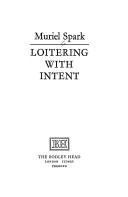
Loitering with Intent
-
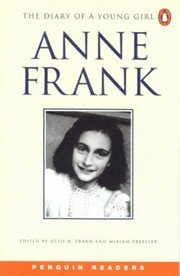
The diary of a young girl
-
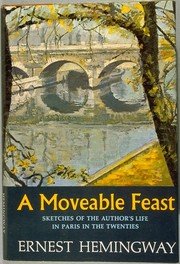
A Moveable Feast
-
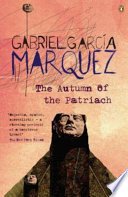
The Autumn of the Patriarch
-
Bird by Bird
-

The Great Gatsby
-
Portnoy's Complaint
-
The Bonfire of the Vanities
-

Where Are The Children?
-
The Sovereignty of Good
-
Drawing on the Right Side of the Brain
-
Several Short Sentences About Writing
-
Pale Fire
-
Steering the Craft
-
Never Let Me Go
Most recommended on How I Write
-
Atomic Habits
On How I Write, James Clear's Atomic Habits was frequently cited by host David Perell and guests like Ali Abdaal and Morgan Housel. Perell used the ubiquitous bestseller as an example of minimalist title design and grassroots marketing strategies, while Abdaal referenced specific frameworks and parables from the text to discuss non-fiction book structure and the importance of repetition in skill development.
Discussed“For example, when James Clear when he did Atomic Habits, I think he had like 80 podcasts that launched that week. There's probably things around BookTok and Twitter and like clipping up different things that you've made about your book, that's more kind of guerrilla marketing tactics that are going to end up being more solo.”
Where to get it
-
East of Eden
John Steinbeck's novel 'East of Eden' was frequently discussed on 'How I Write' by host David Perell and guest Nat Eliason. Perell repeatedly brought up the masterpiece to analyze Steinbeck's simple and effective language, illustrate deep reading habits, and examine how Steinbeck documented his own writing struggles in 'The Journal of a Novel'. Eliason mentioned reading the book to prime himself for writing slower-paced environmental and emotional descriptions.
Discussed“and for an example i want to look at john steinbeck and his book his masterpiece east of eden”
Where to get it
-
The Great Gatsby
F. Scott Fitzgerald's The Great Gatsby was discussed on How I Write across multiple episodes. David Perell and John Yaged talked about reading the novel, watching various film adaptations, and the book entering the public domain. Additionally, David Perell and Michael Dean repeatedly referenced the anecdote of Hunter S. Thompson rewriting the entire novel by hand to understand the mechanics of great writing.
Discussed“So, I read the book, I watched the DiCaprio Gatsby movie, I then watched the Robert Redford Gatsby movie, and then I went to the play.”
Where to get it
-
MOBY-DICK; or, THE WHALE
On How I Write, guests Steven Pressfield, Richard Powers, and Ted Gioia referenced Herman Melville's classic novel 'Moby-Dick; or, The Whale' across multiple episodes. Pressfield cited the work to illustrate how nature and the ocean can embody the female element carrying mystery, while Powers and Gioia discussed it in the context of American literature addressing man versus nature and maximalist writing styles.
Discussed“For instance, we were talking about this earlier, David, in Moby Dick, which has no female characters at all. The sea is the female. And if you think about the sea carrying the mystery, the sea is into the depths which Moby Dick dives.”
Where to get it
-
The 4-Hour Workweek
Timothy Ferriss's 'The 4-Hour Workweek' was discussed on How I Write by host David Perell, Tim Ferriss, and guest Ali Abdaal. Abdaal credited the book as a life-changing influence that inspired him to build a business while in medical school. Perell and Ferriss examined the book's title-testing strategies, early drafting struggles, and structural principles for delegating tasks to virtual assistants.
Discussed“I think the first time I heard about this was I think Tim Ferris tested 4our a 4our work week yeah for his book and he hated the title but it it crushed all the other titles”
Where to get it
-
The Elements of Eloquence
Mark Forsyth's The Elements of Eloquence was discussed across multiple episodes of How I Write. David Perell frequently recommended the book, praised it as a masterpiece, and used it to guide discussions on rhetorical devices and writing patterns. Sam Parr also mentioned the book, noting how a colleague used it to learn how to craft memorable phrases and improve copywriting.
Discussed“And now what I want to do is go through like 10 or 11 this from your book Elements of Eloquence.”
Where to get it
-
Tuesdays with Morrie
Mitch Albom's memoir Tuesdays with Morrie was discussed on How I Write by host David Perell and guest Mitch Albom. Perell brought up the famously successful memoir during conversations about storytelling and writing. Albom reflected on his original motivations for writing the book, which was intended simply to pay medical bills for his former college professor rather than become a global success. He also detailed his rigorous editing process, the emotional tone of researching death, and how the compact physical format of the original book influenced his later publications.
Discussed“Do you know that is? He wrote a book called Tuesdays with Morrie. yeah, yeah.”
Where to get it
-
Bird by Bird
Anne Lamott's Bird by Bird was discussed on How I Write. Harlan Coben and David Perell praised the book as one of the best works on the craft of writing, specifically highlighting its chapter on shitty first drafts. Anne Lamott appeared as a guest to discuss her perspective on writer's block, her writing workshops, observational habits, and the three-draft structure detailed in her book.
Discussed“we were talking off thing about Ann Lamont's bird by bird. She has the great chapter called the shitty first draft that many people are familiar with.”
Where to get it
-
Harry Potter and the Philosopher's Stone
J.K. Rowling's novel Harry Potter and the Philosopher's Stone was mentioned on the How I Write podcast by several guests. John Yaged cited it as a prime example of an outlier book that faced widespread rejection from publishers before succeeding. Shaan Puri referenced the story to illustrate the storytelling mechanics of character intention versus obstacles, while Kevin Kelly mentioned the series during a discussion on simultaneous cultural ideas.
Discussed“I mean, the Harry Potter's the the best example. Almost all the New York publisher I think all New York publishers but one rejected that book.”
Where to get it
-
On Writing
Stephen King's On Writing was discussed on the How I Write podcast. Alex Hormozi recommended the book in early 2025 as one of the best on the subject, while Michael Mauboussin mentioned reading it in 2024 and discussed King's strong work ethic as a writer. Additionally, David Perell referenced the book in late 2023 while discussing the specific clarity required to be a great writer.
Recommended“and I would probably be paring a lot of Stephen King's ‘on writing’ if I were to say”
Where to get it
-
Richard II
On the podcast How I Write, Tyler Cowen mentioned rereading William Shakespeare's Richard II as part of his pleasure reading and research process, noting in another episode how he now uses AI as secondary literature for it. Additionally, the host brought up the play to illustrate a rhetorical formula called a diacap.
Discussed“So I reread Shakespeare's Richard II which is a [clears throat] wonderful play.”
Where to get it
-
The Everything Store
Brad Stone's book The Everything Store was discussed on the How I Write podcast by guests Mark Manson and Jimmy Soni. Manson mentioned reading the biography about Jeff Bezos in connection with early online shopping memories. Soni discussed the book extensively across multiple appearances, noting that he read it between sixteen and twenty times to use it as a structural and qualitative model for his own writing.
Discussed“for the founders, it was The Everything Store by Brad Stone, which I think I've talked to you about before. I read that book over 20 times.”
Where to get it
-
The Wonderful Wizard of Oz
L. Frank Baum's The Wonderful Wizard of Oz was mentioned on How I Write across different contexts. On April 22, 2026, Tish Rabe reminisced about her mother reading classic children's literature to her. On March 4, 2026, Steven Pressfield discussed the book and its film adaptation to illustrate the hero's journey model, specifically the transition from the ordinary world in Kansas to the extraordinary world. Finally, on January 10, 2025, the host referenced the work to provide an example of a false memory.
Discussed“my mother used to read us The Wizard of Oz, the original re well, Wizard of Oz.”
Where to get it
-
Zero to One
Zero to One by Peter A. Thiel and Blake Masters was discussed on How I Write. In August 2023, David Perell and Jimmy Soni talked about the book, with Perell noting its foundation in René Girard's memetic theory and Soni mentioning it as research for a project on PayPal. Later, Marc Andreessen brought it up in October 2023 as an example of an enduring business book, and Perell discussed its underlying religious themes in November 2023.
Discussed“Peter Thiel wrote Zero to One. But if you actually follow the thread, Zero to One is... A Christian book”
Where to get it
-
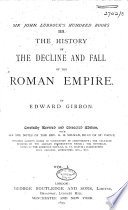
“The” History of the Decline and Fall of the Roman Empire
On How I Write, David Perell brought up Edward Gibbon's classic history to illustrate how a book can possess high objective quality yet still fail to engage a reader whose current interests lie elsewhere. In a separate episode, Ted Gioia discussed reading the same work purely for its exquisite prose style, even though he disagreed with the author's historical arguments.
Discussed“So we'll take a book like Gibbons, the decline and fall of the Roman Empire. Okay, people tell me amazing book. They'll say the writing is is is really strong. It's been super influential.”
Where to get it
-
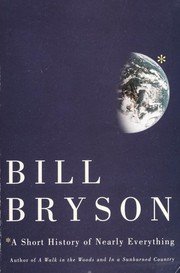
A short history of nearly everything
Bill Bryson's book A short history of nearly everything came up on How I Write in conversations hosted by David Perell. In February 2024 and November 2023, Perell referenced Bryson to illustrate how skilled authors can successfully make broad science and history topics engaging and worthwhile for readers.
Discussed“You talk to people who like Bill Bryson, Bill Bryson wrote A Short History of Nearly Everything, 1927, The Body.”
Where to get it
-
A Tale of Two Cities
On How I Write, Charles Dickens's A Tale of Two Cities was discussed by guests Dean Koontz and R.F. Kuang. In May 2025, Koontz recalled reading the novel later in life as his introduction to Dickens, describing himself as completely captivated by its emotional depth. In September 2026, Kuang mentioned that she had only recently read the book, bringing it up to discuss her appreciation for its campy, soap-opera-like elements alongside Dickens's other works.
Discussed“A Tale of Two Cities was one of the Dickens books that I like embarrassingly hadn't read until like two years ago.”
Where to get it
-
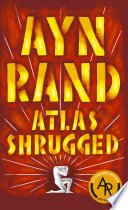
Atlas Shrugged
Ayn Rand's book Atlas Shrugged was discussed on the podcast How I Write by two different guests. Nat Eliason brought up the novel in July 2024 while critiquing the quality of its dialogue, noting moments where characters simply feel like author inserts. Later, in October 2023, Riva Tez mentioned to David Perell that she had repeatedly read the book every couple of years over a fifteen-year period, expressing a wish that she had better understood it as a teenager.
Discussed“It feels there's so many times when reading Atlas Shrugged where it's really clear that that it's no longer this character talking. It's just her insert.”
Where to get it
-
Book of Laughter and Forgetting
On How I Write, Alain de Botton cited Milan Kundera's The Book of Laughter and Forgetting as a major personal influence that demonstrated structural freedom in writing. Later on the same podcast, David Perell brought up the book to discuss graphomania and the desire to write for a public of unknown readers.
Discussed“So um the Czech writer Milan Kundara was extremely important for me um the book of laughter and forgetting uh and the unbearable lightness of being and also his book the art of the novel immensely significant texts that seemed to have an incredible freedom.”
Where to get it
-
Excellent Advice for Living
David Perell introduced Kevin Kelly's book Excellent Advice for Living on How I Write to share one of his favorite maxims, noting that it features a collection of maxims. Perell also discussed the origins of the book, highlighting how it evolved from a blog post that Kelly wrote on his sixty-eighth birthday containing advice for his children.
Recommended“The next is number two, Kevin Kelly, who wrote Excellent Advice for Living, which is a book of maxims and my favorite one is don't aim to be the best, be the only.”
Where to get it
-
Fear and Loathing in Las Vegas
On How I Write, Nat Eliason cited Fear and Loathing in Las Vegas by Hunter S. Thompson as the primary visual inspiration for the cover design of his own book. Later in the same podcast series, David Perell brought up Thompson's novel to illustrate a writer whose work centers heavily on the author themselves.
Discussed“So if you have Hunter S. Thompson, right? He writes Fear and Loathing. This is like Hunter S. Thompson's take on what's going on.”
Where to get it
-
Finnegans Wake
On How I Write, Francine Prose mentioned James Joyce's Finnegans Wake to illustrate her limited patience for obscure or overly difficult writing, stating that if someone put a gun to her head and told her to read it, she would tell them to shoot her. Later on the same podcast, Tom Junod mentioned the book as the chronological end point of the books on his shelf in his shed.
Discussed“I if someone put a gun to my head and said, "You have to read Finnegan's Wake now." It, you know, I go, "Shoot me.”
Where to get it
-
Gates of Fire
On How I Write in September 2023, Lulu Cheng Meservey brought up Gates of Fire by Steven Pressfield as an evergreen recommendation on military reading lists. David Perell discussed the book with her, and Steven Pressfield later mentioned it in November 2023 as one of his early successful works.
Discussed“The Legend of Bagger Vance and Gates of Fire.”
Where to get it
-
Great Expectations
On How I Write, Francine Prose mentioned Charles Dickens's Great Expectations alongside Jane Eyre while discussing the experience of teaching enduring works of literature. In a later episode, Dean Koontz listed Great Expectations among other Dickens novels to illustrate the author's mastery in handling deep human emotion.
Discussed“Well, I you know, one year I taught Jane Air and uh and Great Expectations in the same year. And Janeire is the greatest representation of of female rage ever.”
Where to get it
-
Hackers and Painters
On How I Write, David Perell frequently brought up Paul Graham's Hackers and Painters to illustrate the intersection of quantitative rigor and right-brain imagination. Perell used the book to draw parallels between computer programming and painting, as well as to highlight the collaborative nature of Graham's work through his book acknowledgments.
Discussed“I mean, actually, that's why his book is called Hackers and Painters. Hackers and Painters, sort of that left side of the brain, skepticism, rigor, logic.”
Where to get it
-
How to Write a Thesis
Michael Dean and Marc Andreessen both referenced Umberto Eco's book How to Write a Thesis on How I Write. Dean mentioned the book to explain the pick one volcano principle for narrowing writing scopes, while Andreessen discussed Eco's card catalog system for tracking research notes.
Discussed“So Alberto Ekko, he wrote a book called How to Write a Thesis. Uh and he has something called the pick one volcano principle.”
Where to get it
-
Rocket men
On How I Write, David Perell recommended Robert Kurson's book Rocket Men. Perell read passages from the work to demonstrate effective storytelling techniques, specifically how authors can bring numbers to life through concrete visual analogies.
Recommended“And to do that, I'm going to read you a quote from a book that I love called Rocket Men by Robert Kurson.”
Where to get it
-
Save the cat!
On the How I Write podcast, Nick Bilton mentioned Blake Snyder's book on screenwriting during the episode titled The Secret to Storytelling? in 2024 to illustrate how to think in a character-driven and cinematic way. Later, in an episode from November 2023, guest Steven Pressfield also brought up Blake Snyder and his book while explaining the concept of making storytelling primal.
Recommended“So, learning all of that and like reading books like there's a great book on screenwriting called Kill the Save the Cat.”
Where to get it
-
Shantaram
On How I Write, Sam Parr recommended Gregory David Roberts's novel Shantaram despite usually not reading fiction. David Perell later mentioned the book when discussing massive thousand-page works recommended to him by colleagues.
Discussed“go Sean trom and I go okay tell me about it he goes like it's a thousand pages”
Where to get it
-
Show Your Work!
On the How I Write podcast, Austin Kleon's Show Your Work! was discussed in relation to Ali Abdaal. In Do This to Beat Imposter Syndrome, Abdaal credited the book as a major influence for helping him overcome impostor syndrome, and David Perell brought up the book in A Productivity Master’s Guide to Writing to ask about its impact.
Recommended“but then what show your work taught me is that basically that you don't have to be a genius you don't have to be the guru”
Where to get it
-
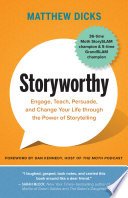
Storyworthy
On How I Write, Matthew Dicks's book Storyworthy came up when the host recommended it during the episode titled 171 Years of Writing Knowledge in 90 Minutes, praising it as an amazing guide by a storytelling champion. Later, during the episode Master Storytelling in 108 Minutes with Shaan Puri, Shaan Puri also recommended the book, explaining how it highlights the necessity of stakes and moments of change in great storytelling.
Recommended“the story Worthy is amazing book by this like teacher guy who's like the 20time storytelling champion of the moth storytelling”
Where to get it
-
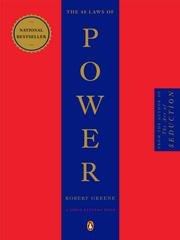
The 48 Laws of Power
Robert Greene and Joost Elffers's The Evolution of Cooperation was not the focus, but rather The 48 Laws of Power, which was discussed on the How I Write podcast. David Perell brought up the book in September 2024 to ask Greene about his writing evolution. Steven Pressfield also mentioned the book in late 2023 while discussing Greene's career breakthrough and contrasting its comprehensive nature with advertising brevity.
Discussed“Like if you look at 48 laws, where do you feel like you've had the largest margin of improvement?”
Where to get it
-
The big short
On How I Write, Harry Dry mentioned Michael Lewis's book The Big Short to illustrate how a writer's long-term personal experience feeds into their book, noting that Lewis spent a long time working on Wall Street before writing it. Later on the same podcast, Ryan Holiday brought up the book to illustrate the concept of an author meeting their ultimate moment, stating that everything in Lewis's life, including his background in finance and previous characters, led up to it.
Discussed“Michael Lewis spent forever working on Wall Street, waited and waited and then was able to write The Big Short.”
Where to get it
-
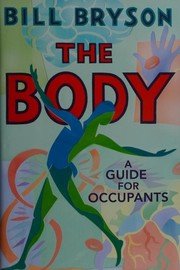
The Body
On the How I Write podcast, Tim Urban recommended Bill Bryson's book The Body in January 2024, praising the extensive research behind it as an example of exceptional writing. Later in February 2024, David Perell also mentioned Bryson's books while discussing authors who successfully explore diverse subjects.
Discussed“You talk to people who like Bill Bryson, Bill Bryson wrote A Short History of Nearly Everything, 1927, The Body.”
Where to get it
-
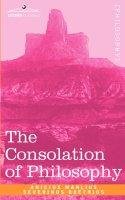
The Consolation of Philosophy
On the How I Write podcast, David Perell in January 2024 and the Cultural Tutor in August 2023 recommended The Consolation of Philosophy by Boethius. The speakers suggested reading Boethius instead of modern bestsellers like Atomic Habits as an example of foundational literature that helps writers cultivate a unique voice and stand out.
Recommended“if rather than reading Atomic Habits, you go and read I don't know Boethius, The Consolation of Philosophy.”
Where to get it
-
The Decline and Fall of the Roman Empire, by Edward Gibbon. Vol. 2. [-3-4].
On the How I Write podcast, David Perell brought up Edward Gibbon's classic history to illustrate how a book can have high objective quality yet fail to engage a reader if it does not match their current interests. In a separate episode, Ted Gioia discussed reading the same work purely for its exquisite prose style even though he disagreed with the author's arguments.
Discussed“So we'll take a book like Gibbons, the decline and fall of the Roman Empire. Okay, people tell me amazing book. They'll say the writing is is is really strong. It's been super influential.”
Where to get it
-
The Epic of Gilgamesh
The Epic of Gilgamesh was discussed on How I Write in two different episodes. Elif Shafak brought up the ancient epic on the episode Elif Shafak & Robert Macfarlane: Two Novelists Have an Epic Conversation to illustrate themes of failure, defeat, and heroism. Later, on the episode Tom Junod: How to Write Unapologetically Well, David Perell suggested the work as a potential pre-Bible starting point for Tom Junod's chronological bookshelf.
Discussed“And I know we both, all of us love the epic of Gilgamesh. But this is one of the many reasons why I love the epic because it really talks makes us think about failure, defeat.”
Where to get it
-
The Godfather
The Godfather by Mario Puzo was discussed on How I Write in 2024 and 2026 episodes. Andrew Stanton brought up the novel to explain an acting coach's concept of character spines using Michael Corleone. Additionally, David Perell and Tiago Forte discussed Francis Ford Coppola's intensive research process of cutting up and annotating pages of the novel into a working notebook for the film adaptation.
Discussed“Judith Weston, who is a acting coach, taught me this term. And she gave a good example that like Michael Corleone in The Godfather, his spine is to please his father, and that never goes away even after his father dies all the way through the second Godfather movie.”
Where to get it
-
The Grapes of Wrath
On How I Write, John Steinbeck's novel 'The Grapes of Wrath' was discussed by guest Dana Gioia across two episodes. On February 26, 2025, Gioia cited the book as one of the greatest American novels, praising its ability to portray the dignity of the poor despite its imperfections. He revisited this sentiment on December 3, 2025, during a recap of writing lessons, once again highlighting Steinbeck's masterwork among top American literature.
Discussed“John Steinbeck, if you read The Grapes of Wrath, for all of Grapes of Wrath's imperfections, he has written one of the greatest American novels”
Where to get it
-
The Hobbit
The Hobbit by J.R.R. Tolkien was discussed across different episodes of How I Write. David Perell quoted the novel to highlight the solitary moments of fear and courage heroes experience before taking action. Adrian Tchaikovsky also discussed the book, using Smaug to illustrate how fantasy monsters can embody human traits like greed.
Discussed“Listen to this from Tol. Okay. It was at this point that Bilbo stopped. Going on from there was the bravest thing he ever did. The tremendous things that happened afterwards were nothing compared to it. He fought the real battle in the tunnel alone before he ever saw the vast danger that lay in weight.”
Where to get it
-
The Lord of the Rings
J.R.R. Tolkien's The Lord of the Rings was discussed on How I Write by Dana Gioia in December 2025, who characterized it as the greatest novel in English about the First World War. In August 2023, David Perell also referenced the fantasy novel to emphasize the value of mutual encouragement and community among writers.
Discussed“Tolken, I think The Lord of the Rings is the greatest novel in English written about the First World War”
Where to get it
-
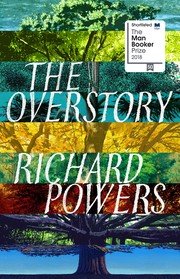
The Overstory
During the How I Write podcast, David Perell and guest Jason Fried discussed Richard Powers' novel The Overstory. Perell interviewed Powers in an episode where he noted that the book won the Pulitzer Prize in 2019, praised its articulation of trees, and read an excerpt aloud. Perell also referenced the novel while asking Powers about his research process and the development of empathy for nature. Separately, in an episode with Jason Fried, the guest brought up the book to express how deeply inspired he was by Powers' writing style.
Recommended“Richard Powers won the Pulitzer Prize for the over story in 2019 and and I had some friends who recommended it to me”
Where to get it
-
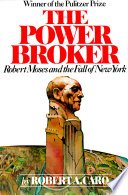
The Power Broker
David Perell and Jimmy Soni discussed Robert A. Caro's book The Power Broker on How I Write. Perell praised Caro's writing and explained how the massive biography resonated with him while living in New York, while Soni cited the book as a masterpiece with long-term cultural endurance.
Discussed“Or they'll talk about The Power Broker. That's one of my favorites. The Power Broker by Robert Carrow. It is 1,344 pages. But David, I know it's long, but I'll tell you, Robert Caro is such a good writer.”
Where to get it
-
The Protestant ethic and the "spirit" of capitalism and other writings
On How I Write, Paul Millerd and David Perell discussed Max Weber's 'The Protestant Ethic and the "Spirit" of Capitalism and Other Writings' in episodes from 2023 and 2024. Perell reflected on taking an in-depth college course focused on Weber's work, while Millerd referenced it while discussing historical deep dives into the history of work included in his own writing.
Discussed“What? The Protestant ethic? No, like it the book is this combo. Like chapter three, I didn't really know where to position chapter three. Chapter three is a the it's called work work work. It's basically a deep dive into the history of work. And so when I started the book, that was the book. I was going to write”
Where to get it
-
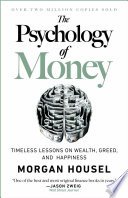
The Psychology of Money
Morgan Housel's book The Psychology of Money was discussed on How I Write by two guests. Ali Abdaal cited the book as a recent favorite, praising its structure of twenty distinct chapters and expressing a desire to emulate its style in his own writing. In a later episode, Morgan Housel himself reflected on the manuscript, noting that when he first turned it in, he did not fully realize the extent of his own arguments until after completion.
Discussed“One of the things that I didn't really understand at the time when I wrote Psychology of Money. I I I think I probably could have expressed this when I wrote it but I didn't believe it as much as I do now is when I turned in the manuscript for Psychology of Money I had a deep sense of”
Where to get it
-
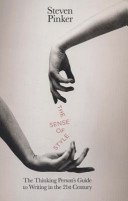
The Sense of Style
On How I Write, guests Johnny Harris, David Perell, and Michael Mauboussin discussed Steven Pinker's The Sense of Style. Johnny Harris cited the book as his entire writing bible for active language, while David Perell and Michael Mauboussin referenced chapters three and two respectively to explore the concepts of the curse of knowledge and classic style in writing.
Recommended“Stephen pinker's got this great book sense of style that where he unpacks this and it it is my entire Bible of writing”
Where to get it
-
The Talented Mr. Ripley
On the How I Write podcast, David Perell discussed Patricia Highsmith's The Talented Mr. Ripley during multiple episodes. In July 2026, he mentioned the book while exploring moral themes and narrative justice, praising the story and noting that he had watched the film adaptation. Earlier, in March 2026, Perell brought up the work with Steven Pressfield to examine narrative escalation and the midpoint shift in storytelling.
Discussed“Like So, I I think there's something immensely appealing for readers it of like that that that is what happens. Justice is served. That story is phenomenal. The Talented Mr. Ripley. Holy cow. I haven't read the book, but I've watched the movie and it is so good.”
Where to get it
-
Thinking, Fast and Slow
On How I Write, host David Perell and guest Ali Abdaal discussed Daniel Kahneman's Thinking, Fast and Slow. Perell brought up the book to examine the distinct experience of reading a full-length work versus consuming short-form summaries. Abdaal referenced the same title to illustrate the phenomenon of popular book summaries on social media, noting how threads detailing key highlights from Kahneman's book can attract millions of views.
Discussed“I just read Thinking Fast and Slow by Daniel kman”
Where to get it
-
To Kill a Mockingbird
Harper Lee's To Kill a Mockingbird was discussed by guests on the How I Write podcast. In separate episodes, David Baldacci and Dana Gioia reflected on the cultural impact of the novel. Baldacci shared that he read the book as a child, viewing it simply as an adventure story before his perspective evolved over time, while Gioia noted that Lee achieved lasting literary success publishing just a single book during her lifetime.
Discussed“I read I read Mockingbird like most people read Mockingbird when I was a kid. And back then it was just an adventure story with kids roughly my age and I thought it was so cool.”
Where to get it
-
Tom Jones
On How I Write, Ward Farnsworth brought up Henry Fielding's novel Tom Jones in multiple episodes. Farnsworth used the book to provide a literary example of a chiasmus-like structure.
Discussed“It's as possible for a man to know something without having been at school as it is to have been at school and to know nothing from this beautiful novel called Tom Jones by Henry Fielding.”
Where to get it

Host picks
- East of Eden
- The Elements of Eloquence
- Atomic Habits
- The Great Gatsby
- Tuesdays with Morrie
- A short history of nearly everything
- Excellent Advice for Living
- Hackers and Painters
- Rocket men
- The 4-Hour Workweek
- The Talented Mr. Ripley
- Understanding Media
- Where the wild things are
- Zero to One
- “The” History of the Decline and Fall of the Roman Empire
- $100M Leads
- 1927
- A Moveable Feast
- A People's History of the United States
- A Series of Unfortunate Events: Lemony Snicket
Guest picks
- MOBY-DICK; or, THE WHALE
- Atomic Habits
- Bird by Bird
- Harry Potter and the Philosopher's Stone
- The 4-Hour Workweek
- The Everything Store
- Tuesdays with Morrie
- A Tale of Two Cities
- Atlas Shrugged
- Finnegans Wake
- Gates of Fire
- Great Expectations
- How to Write a Thesis
- On Writing
- Richard II
- Save the cat!
- The big short
- The Godfather
- The Grapes of Wrath
- The Great Gatsby
Guests who recommended books
- Steven Pressfield (21)
- Anne Lamott (17)
- Tish Rabe (17)
- Tim Ferriss (14)
- Adrian Tchaikovsky (13)
- David Grann (13)
- Michael Dean (13)
- Jimmy Soni (12)
- Dana Gioia (11)
- Alain de Botton (11)
- Dean Koontz (11)
- Ryan Holiday (11)
- Ali Abdaal (11)
- Steven Johnson (9)
- Riva Tez (9)
- Sam Parr (9)
- Francine Prose (8)
- R.F. Kuang (8)
- Matt Haig (8)
- Bill Browder (8)
- Mitch Albom (8)
- Nat Eliason (8)
- Michael Mauboussin (8)
- Amor Towles (8)
- Jayne Anne Phillips (7)
- Ted Gioia (7)
- Brie Wolfson (7)
- Ward Farnsworth (6)
- Neil Strauss (6)
- Tyler Cowen (5)
- Andrew Stanton (5)
- David Zucker (5)
- Johann Hari (5)
- Will Storr (5)
- The Cultural Tutor (5)
- Paul Millerd (5)
- Harlan Coben (4)
- David Baldacci (4)
- Ocean Vuong (4)
- John Yaged (4)
Latest mentions
“Well, since I mentioned Anna Corinina, you know, Anna is dancing with Ronsky, right? She's met Franson on the train and there's this instant attraction and and Kitty, who is in love with and I guess at that point still engaged to Veronsky, is uh is the one who would most notice the two of them are dancing.”
“Like the books were going to be in there chronologically. And so it begins with the Bible and ends with Finnegan's Wake, you know.”
“Oliver Twist Great Expectations Tale of Two Cities he wasn't afraid of emotion”
“Well, I you know, one year I taught Jane Air and uh and Great Expectations in the same year. And Janeire is the greatest representation of of female rage ever. And that that hasn't gone away.”
“I mean, one thing is I really like indeterminate endings, you know. I mean, there's the ending of uh uh Czechov's lady with the pet dog, which is and they realize that the hardest part was still before them.”
“Have you read um Mural Sparks Lording with intent? I have not. It's really great, but it's the only thing I know about the phenomenon that I most of my close friends who are writers have had”
“I was struck by how much Anne Frank edited her her diaries. That seems to be something you were talking about over and over again. She wanted them to be published.”
“Well, I was thinking of that part of a movable feast by Hemingway where he just says, "Write one true sentence. Write one true sentence."”
“The Garcia Marquez's Ottoma the Patriarch is one paragraph without paragraph breaks. And a friend of ours, a Polish artist, was saying, "Oh, I hate this book."”
“This is an anecdote I love from Bird by Bird where Anne Lamott will just, she sort of is absorbing her world and she keeps an index card of observations in her back pocket”
“You know, Hunter S. Thompson rewrote The Great Gatsby just so he could feel what it was like to write a great novel.”
“two of my favorite books of the you know when I was sort of coming of age poor noise complaint by Philip Roth and Bonfire the Vanities by Tom Wolf both are horrendous films unwatchable”
“two of my favorite books of the you know when I was sort of coming of age poor noise complaint by Philip Roth and Bonfire the Vanities by Tom Wolf both are horrendous films unwatchable”
“Where are the children was her her first legendary book. When Mary was 37 years old, she had five kids.”
“So Iris Murdoch is this philosopher I admire a lot and she has an essay of sovereignty of good.”
“And there's a book called Drawing on the Right Side of the Brain.”
“I I learned this attitude from a book called um several very short sentences are writing by Verlin Clinkenborg.”
“you're not going to get your next pale fire from an LLM.”
“there's this um passage from Ursula Leguin's book on craft steering the craft where she says like imitation is a fantastic exercise.”
“very influenced by Kazu Ishiguro's Never Let Me Go.”