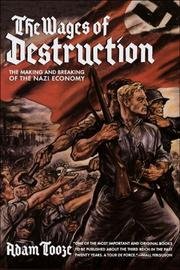
Why people recommend it
J. Adam Tooze's acclaimed work of economic history meticulously analyzes the financial structures and economic pressures of Nazi Germany leading up to the Second World War. Pierpaolo Barbieri recommended the book on Conversations with Tyler to anyone interested in economic history, praising its comprehensive research and insights. Barbieri also cited the author's work during the same interview while discussing Nazi economic policy and military spending, noting how a significant percentage of the gross domestic product was ultimately funneled into armaments. In another episode of Conversations with Tyler, Tyler Cowen brought up the book while questioning the author about historical debates, specifically referencing a review by Robert Gordon that argued the volume may have underestimated German prosperity during the 1930s. These discussions underscore the book's status as a vital text for understanding the complex intersection of totalitarian politics, industrial capacity, and macroeconomic policy in the twentieth century.
Who recommended it
- Pierpaolo Barbieri Recommended
- Tyler Cowen Discussed
Pierpaolo Barbieri — 2 mentions
“because at one point as as adam twos wrote masterfully in wages of destruction you know you ended up having 20 to 25 of gdp going into armaments”
“if you like economic history i would recommend you know wages of destruction by twos”
Tyler Cowen — 1 mention
“Robert Gordon in his review of your book Wages of Destruction argues that you've underestimated German prosperity in the 1930s.”
Also mentioned in the same episodes
Other mentions (2: passing, ad reads, own books)
“And what Wages of Destruction was trying to do is to say, "Okay, let's write a history of the Third Reich on against the backdrop of assuming that this makes a difference.”
“So what what Wages of Destruction was doing was trying to unpick those anachronistic assumptions about the obvious dominance of the German economy”