
Why people recommend it
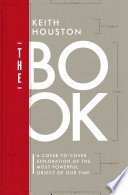
The Book: A Cover-to-Cover Exploration of the Most Powerful Object of Our Time by Keith Houston is a comprehensive history of the physical book format and its cultural impact. On ChooseFI, Josue shared that he immediately downloaded the book on his Kindle and devoured it after hearing an inspiring episode. Megyn Kelly mentioned reading and enjoying a book by Charlamagne on The Megyn Kelly Show, highlighting themes of introspection and personal growth. Chris Williamson referenced passages about self-compassion on Modern Wisdom. Ryan Holiday discussed various writing projects, completion processes, and conclusions incorporating memento mori concepts with guests like Shane Parrish and Rick Rubin on The Daily Stoic. Additionally, Eric Holder appeared on The Daily Stoic to discuss political history and the future of the American coalition in relation to a book project, while Holiday expressed continuous admiration for various guests' published works throughout the podcast's interview segments.
Who recommended it
- Ryan Holiday Discussed
- Megyn Kelly Discussed
- Chris Williamson Discussed
- Eric Holder Discussed
Ryan Holiday — 4 mentions
“Which projects would I take off my plate? So you finally did the book. When did you sell it?”
“Uh, so you end the book with a kind of a memento mori, right? I like the Scrooge example; I think that that's so pressing for people, right? Which is like, if you let society unconsciously tell you what to pursue, what happens?”
“Then when it's done and there are no more creative decisions to be made, and the book is written, you may not have the final final version of it, but you know exactly what the book is. You've said what you want to say, and you feel good about it; that would be the first time to think about, okay,”
“It's a pleasure to talk; I love the book. I found it very interesting.”
Megyn Kelly — 1 mention
“You know, I think I read the book and I really enjoyed it, and I think what makes you special is your extreme ability to be introspective, reflective about your life, to keep challenging yourself, to keep changing, keep growing, and you're very, very honest about what you perceive as your own shortcomings.”
Chris Williamson — 1 mention
“All in all, one of my favorite passages in the book contains a line about self-compassion.”
Eric Holder — 1 mention
“The Obama coalition is really kind of the future of America, which is why he was so feared, and why we say in the book, there was that backlash.”
Mentioned on the show without a named speaker — 1
“As soon as I heard the episode, I went out and downloaded the book on my Kindle and just devoured it.”
Also mentioned in the same episodes
Other mentions (13: passing, ad reads, own books)
“My sister and I talk about this in the book; it’s just not rational when it comes to chronic conditions.”
“My sister and I talk about this in the book; it’s just not rational when it comes to chronic conditions and the long-term sicknesses destroying this country.”
“You, in the book you write about your background.”
“That's why I wrote a chapter in the book called 'Never Satisfied.'”
“No, no, when I saw it in the book, I was like, wait, I don't know why I thought you were like an East Coast person or something.”
“So talk about like there's two pieces of advice: one I followed and one I didn't, and they were super helpful. Yours, in hindsight, because you talked about structuring the book before you start writing. Okay, and so the process of writing it twice was like a little bit of hubris on my part.”
“But the risk that people don't want to do with that is—and I talk about this a little bit in the book with identifying—the most important thing is you're putting yourself in a position where you could be wrong. Yes, so if I'm going to exercise judgment, I'm going to try to give Ryan, you know, above and beyond what's”
“That's when you can start thinking; we call that the crafting phase in the book. The first stage is the seed phase where we're gathering ideas; the second phase is the experimentation phase where we're watering those seeds, seeing what they want to be on their own.”
“But one of the things that I've learned from the book in working on the book is that that last phase, the editing and getting ready to share it, you can do that on a schedule. Whereas you can't really collect the seeds on a schedule, you can't really do the experimentation on a schedule.”
“But I argue in the book that we’re also terrible at feeling the consequences of long-term schemes. Our brains are still designed for making decisions in the here and now, just like animals.”
“In the book, I argue this isn't necessarily true with what we know from animal cognition, as they do have a bit of future planning. But for the most part, yes, that is true—we can think about our own deaths.”
“I’m not sure; in the book, I make an advanced calculation. Thinking about your death and planning these legacy projects, like writing a book to be remembered for, guides our actions, which is great.”
“There's one story in the book where I'm getting recruited to go to college to play ball.”