Um, I mean that's one of my favorite books, Stefan Zweig's The World of Yesterday, including the descriptions of what it was like trying to have sex in pre-First World War Vienna.
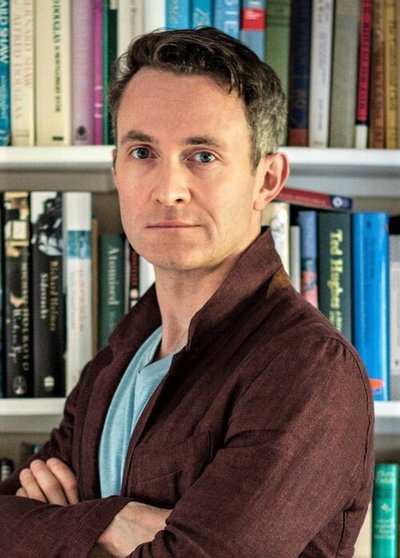 Douglas Murray · Lex Fridman Podcast · Jun 2022 Listen at 2:36:41
 The best things said about it
The great Viennese writer Stefan Zweig, who killed himself in 1942, left behind a memoir called 'The World of Yesterday.' It is a heartbreaking book about a Vienna that, in retrospect, didn't stand a chance.
This is what Stefan Zweig writes about 'The World of Yesterday'—even more so in retrospect, because, of course, post-war Vienna, 1918, was so appalling, anything before then looked like a golden age.
Here is a passage from 'The World of Yesterday' by Stefan Zweig, which he finished just before he and his wife killed themselves in 1942: 'In its liberal idealism, the 19th century was honestly convinced that it was on the straight and unfailing path toward being the best of all worlds; earlier eras, with their wars, famines, and revolts, were.
So my sense is that Vienna, before World War I, was like that. That's certainly the impression I get from reading Stefan Zweig's 'The World of Yesterday.' I mean, there was a lot of disruption in the visual arts especially; you know, Egon Schiele's extremely intense and very sexualized paintings, which landed him in prison for a bit.
Why people recommend it
Stefan Zweig is a biographical and historical examination of the rich cultural life and tragic demise of the renowned Austrian writer Stefan Zweig, whose memoir The World of Yesterday captures the lost golden age of Vienna. On Freakonomics Radio, the host discussed Zweig's memoir at length, describing it as a heartbreaking and poignant reflection on pre-World War I Vienna, a society that ultimately stood little chance against historical upheavals. The host read passages from the book to illustrate how the liberal idealism of the nineteenth century fostered a misplaced faith in continuous human progress, contrasting sharply with the devastating post-war reality that drove Zweig and his wife to suicide in 1942. On the Lex Fridman Podcast, Douglas Murray named Stefan Zweig's The World of Yesterday as one of his absolute favorite books, specifically praising its vivid and evocative descriptions of romance and social life in pre-First World War Vienna. Across these discussions, the book is consistently recommended as an essential, beautifully written historical document that vividly preserves the tragic intellectual landscape of early twentieth-century Europe.
Every mention
Douglas Murray Um, I mean that's one of my favorite books, Stefan Zweig's The World of Yesterday, including the descriptio… 1
“Um, I mean that's one of my favorite books, Stefan Zweig's The World of Yesterday, including the descriptions of what it was like trying to have sex in pre-First World War Vienna.”
Mentioned on the show without a named speaker4
“The great Viennese writer Stefan Zweig, who killed himself in 1942, left behind a memoir called 'The World of Yesterday.' It is a heartbreaking book about a Vienna that, in retrospect, didn't stand a chance.”
“So my sense is that Vienna, before World War I, was like that. That's certainly the impression I get from reading Stefan Zweig's 'The World of Yesterday.' I mean, there was a lot of disruption in the visual arts especially; you know, Egon Schiele's extremely intense and very sexualized paintings, which landed him in prison for a bit.”
“This is what Stefan Zweig writes about 'The World of Yesterday'—even more so in retrospect, because, of course, post-war Vienna, 1918, was so appalling, anything before then looked like a golden age.”
“Here is a passage from 'The World of Yesterday' by Stefan Zweig, which he finished just before he and his wife killed themselves in 1942: 'In its liberal idealism, the 19th century was honestly convinced that it was on the straight and unfailing path toward being the best of all worlds; earlier eras, with their wars, famines, and revolts, were”